
If you want to automate lead management, the issue usually isn’t traffic.
It’s what happens after someone shows interest.
Most small businesses don’t have a lead problem. They have a response problem.
A form gets filled. A message gets sent. A call gets missed.
Then nothing happens.
Or it happens too late.
That delay is where deals disappear.
Quick Summary
- Automating lead management removes delays between enquiry and response
- The first business to reply usually wins the deal
- Follow-up is where most conversions actually happen
- One connected system works better than multiple tools
- Most businesses already have enough leads. They just lose them
The Gap That’s Costing You Sales
Here’s a real situation.
A lead comes in at 11:18am.
You’re busy. You see it at 2:40pm.
You reply later that evening.
By then, they’ve already booked with someone else.
This isn’t about effort. It’s about timing.
If your system depends on when you check messages, you don’t control your leads.
You react to them.
And reacting is always slower than automation.
What It Means to Automate Lead Management
Automation is not a tool.
It’s a process that removes delay and inconsistency.
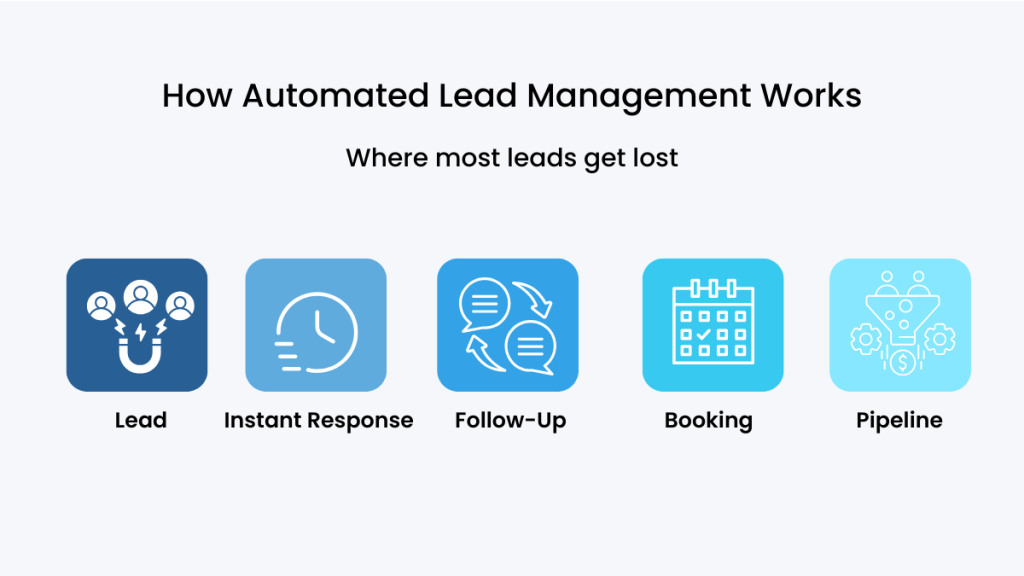
A working system does four things:
- Captures every lead in one place
- Responds instantly
- Follows up automatically
- Tracks every lead clearly
If one of these breaks, leads get lost.
Most businesses are missing at least one. Usually more.
The Simple System That Fixes This
You don’t need something complicated.
You need something that runs without you.
1. Capture Leads Without Losing Them
If leads are spread across:
- email inbox
- Facebook messages
- website forms
- call logs
You don’t have a system. You have scattered data.
At some point, you’ve searched for a lead and couldn’t find it quickly.
That’s not a small issue. That’s lost revenue.
This is why businesses move to a single pipeline setup like the one explained in Best CRM With Automation for Small Businesses (2026). It removes the guesswork completely.
2. Respond Within Seconds
Speed isn’t a bonus. It’s the advantage.
Your system should trigger immediately:
Lead submits form →
SMS sent within seconds →
Email confirmation sent →
Optional booking link included
No delay. No manual step.
If you’re replying later, you’re competing with businesses that already automated this.

3. Follow Up Without Thinking About It
Most leads don’t convert on the first interaction.
They hesitate. They forget. They compare.
If your follow-up depends on memory, it won’t happen consistently.
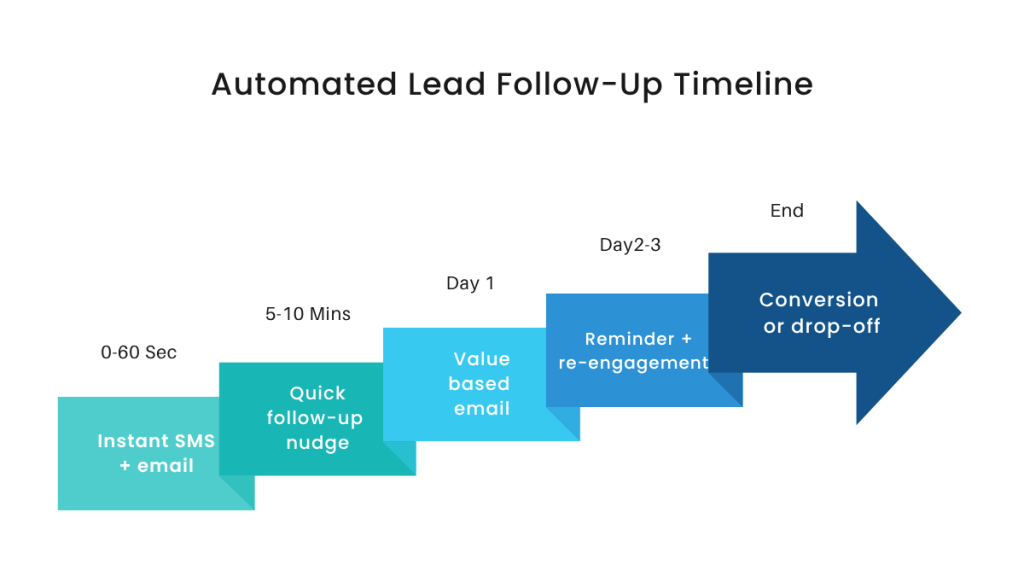
A working sequence looks like:
Day 0 → instant reply
Day 1 → reminder
Day 2 → check-in
Day 5 → final message
This runs in the background.
If you’re not doing this, you’re losing leads you already paid for.
4. Track Every Lead Clearly
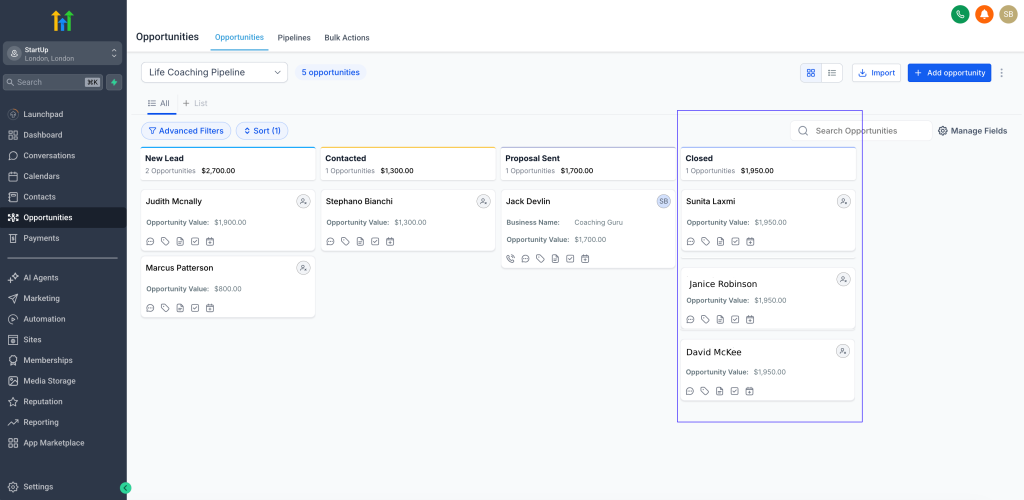
You need to see:
- who just came in
- who was contacted
- who booked
- who didn’t convert
If you’ve ever thought “what happened to that lead?”, your system isn’t clear enough.
Automation fixes that by making every stage visible.
Where Most Businesses Go Wrong
They try to fix this by adding more tools.
A form builder.
An email platform.
A CRM.
A calendar.
None of them properly connected.
Now instead of one problem, you have four.
Automation only works when everything runs inside one system.
When the Tool Actually Matters
Once the system is clear, the tool becomes obvious.
You need something that can:
- capture leads from all sources
- send instant responses
- run follow-up sequences
- manage a pipeline
That’s where platforms like GoHighLevel fit.
Not because it’s “better,” but because it removes the gaps.
If your leads are still being handled manually, this is where it breaks. Start a free trial and see the full system running in one place.
What This Looks Like in Practice
A service business runs ads.
Before:
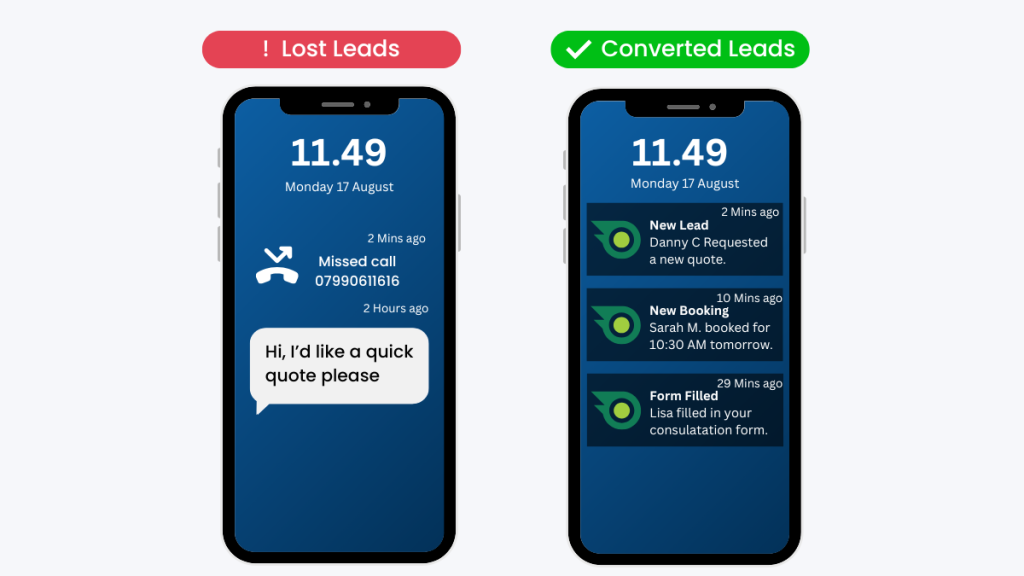
Leads come in → delayed replies → missed bookings
After:
Lead submits form → instant SMS → booking link → reminders → appointment booked
Same number of leads.
More conversions.
No extra ad spend.
The Part Most People Don’t Notice
Automation isn’t just about saving time.
It removes inconsistency.
Without it, your process depends on:
- how busy you are
- whether you remember
- when you check messages
That’s unpredictable.
Automation replaces that with a fixed system.
Every lead gets the same response, every time.
When You Should Fix This
If any of this sounds familiar:
- you’ve forgotten to reply to a lead
- you rely on your inbox to manage enquiries
- you don’t follow up consistently
- you don’t know how many leads you lost
Then your system is costing you money.
For example, businesses using a missed call text back system recover leads they didn’t even realise they missed. That alone can increase conversions without spending more.
Why More Leads Won’t Fix This
Most people try to grow by increasing traffic.
More ads. More visibility.
But if your system is slow or inconsistent, more leads just means more waste.
Fix the handling first.
Then scale.
This is the same issue explained in GoHighLevel Hidden Costs (2026), where poor systems end up being more expensive than the software itself.
Final Verdict
Automating lead management isn’t about working harder.
It’s about removing the delay that’s quietly costing you deals every day.
Right now, your system either replies instantly or it doesn’t.
It either follows up consistently or it relies on you remembering.
That gap is where most businesses lose sales.
Not because the lead wasn’t interested.
Because nobody responded fast enough.
Once you fix that, everything changes.
Leads get handled immediately.
Follow-ups happen without effort.
Your pipeline becomes predictable instead of messy.
And you stop wondering what happened to potential customers.
Try GoHighLevel free and turn your lead handling into a system that runs without you
FAQ
What is lead management automation?
It’s a system that captures, responds to, and follows up with leads automatically so nothing gets missed.
How quickly should I respond to leads?
Ideally within seconds. Faster responses consistently convert better.
Do I need multiple tools for this?
No. A single connected system is usually more effective than several separate tools.
Is this only for larger businesses?
No. Small businesses benefit more because they can’t afford to lose leads.
What’s the biggest mistake?
Relying on memory instead of a system. That’s where most leads get lost.