
Most businesses start tracking leads in spreadsheets.
It works for a while.
Then the problems start. Leads get missed. Follow-ups happen too late. Sales conversations disappear in inboxes or WhatsApp threads.
That’s usually the moment people start researching CRM pricing.
But the pricing pages rarely tell the full story. Some CRMs charge per user. Others charge per contact. Automation tools add extra fees. And suddenly a “$30 tool” becomes a $200 system.
This guide breaks down CRM pricing in simple terms so you can understand what CRM software actually costs in 2026 and which pricing model makes sense for your business.
If you’re comparing systems right now, you may also want to read the guide on Compare CRM Software, which breaks down the main platforms businesses choose between.
Quick Summary
CRM pricing varies widely depending on the type of system you choose.
- Entry-level CRM tools
Basic contact management platforms typically start around $10–$30 per user per month. These are designed for small teams that only need lead tracking. - Sales CRM platforms
Tools focused on pipeline management usually cost $30–$90 per user monthly. They add automation, email integrations, and reporting. - Marketing automation CRMs
Platforms that combine CRM, funnels, automation, and messaging typically range from $97–$500 per month depending on features. - Enterprise CRM systems
Larger tools like Salesforce can cost hundreds per user per month once customization and integrations are added.
Understanding these pricing models is key because the structure of the pricing often matters more than the number on the landing page.
What CRM Pricing Actually Means
Before comparing tools, it helps to understand what CRM pricing is actually paying for.
A CRM (Customer Relationship Management system) stores customer data, tracks sales pipelines, and automates communication with prospects.
According to the Salesforce, CRM software helps businesses manage relationships with customers and prospects by organizing interactions and automating workflows.
But modern CRMs do far more than that.
Many now combine:
• marketing automation
• lead capture forms
• email marketing
• SMS messaging
• sales pipelines
• reporting dashboards
This is why the pricing models vary so much.
Some tools charge for contacts. Others charge for users. Some charge for automation features.
Understanding these models will help you avoid the biggest CRM pricing surprises.
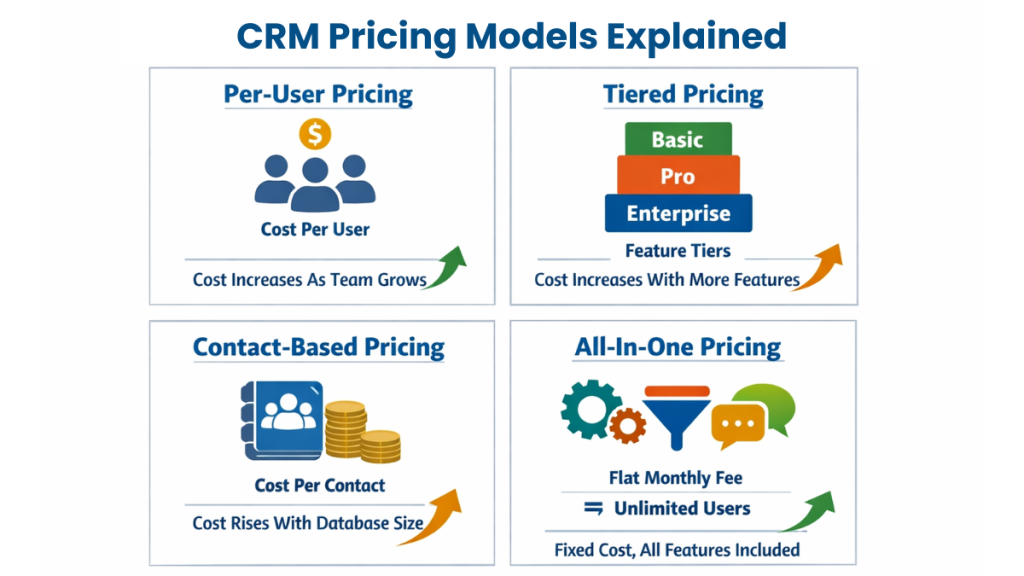
The 4 Main CRM Pricing Models
When comparing platforms, most CRM pricing falls into four common structures.
1. Per-User Pricing
This is the most common model.
You pay a monthly fee for each team member who uses the CRM.
Typical cost range:
$20 – $90 per user per month.
Example scenario:
A small sales team with 5 users on a $50 CRM plan would pay:
$250 per month.
The upside is scalability. The downside is that costs grow quickly as your team expands.
Many businesses researching CRM systems for the first time discover this limitation after they hire their first few sales reps.
2. Tiered Feature Pricing
Some CRM platforms offer tiered plans instead of per-user charges.
Example tiers might include:
Starter plan
Professional plan
Enterprise plan
Each tier unlocks more automation features, reporting tools, or integrations.
This model works well for small businesses that want predictable monthly costs.
If you’re exploring options for smaller teams, the guide CRM Packages for Small Businesses explains how these plans are typically structured.
3. Contact-Based Pricing
Email marketing CRMs often charge based on the size of your contact database.
Typical pricing looks like:
• up to 1,000 contacts
• up to 5,000 contacts
• up to 10,000 contacts
As your database grows, so does the monthly price.
This model works well for marketing teams but can become expensive for businesses generating large numbers of leads.
4. All-In-One Platform Pricing
Some modern CRMs bundle everything into one fixed monthly price.
Instead of charging per user or contact, they offer:
• unlimited users
• automation tools
• funnels
• messaging systems
This pricing model has become popular with agencies and service businesses because it avoids the per-user scaling problem.
Many marketing automation platforms follow this structure.
CRM Pricing Comparison (Typical Ranges)
| Platform Type | Best For | Automation Level | Typical Monthly Pricing |
|---|---|---|---|
| Basic CRM | Small teams tracking leads | Low | $10–$30 per user |
| Sales CRM | Pipeline management and reporting | Moderate | $30–$90 per user |
| Marketing CRM | Email marketing and lead nurturing | High | $50–$150 per user |
| All-in-One CRM | Automation, funnels, messaging | Very High | $97–$497 flat monthly |
This table explains why researching CRM pricing can feel confusing.
Two platforms might both say “CRM,” but the feature sets can be completely different.
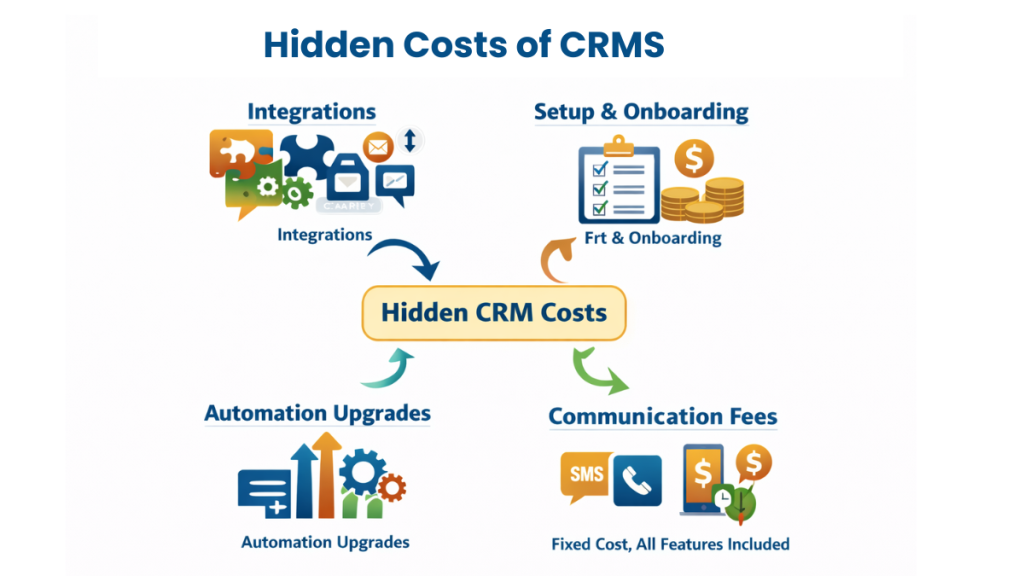
The Hidden Costs of CRM Software
Many pricing pages show the base subscription price.
But the real CRM pricing often includes additional costs.
Setup and onboarding
Some CRMs require onboarding packages or implementation fees.
Enterprise systems sometimes charge thousands for this step.
Integrations
If the CRM doesn’t include built-in marketing tools, businesses often need additional software for:
email marketing
automation
SMS messaging
lead capture
Each tool adds another subscription.
Automation costs
Advanced automation features are sometimes locked behind higher tiers.
Businesses researching automation tools often encounter this while comparing platforms in the Best Free CRM for Small Business category.
Many “free CRMs” only include basic contact storage.
Automation typically requires paid plans.
Communication fees
Some CRMs charge for:
• SMS messages
• phone calls
• email volume
These costs are usually usage-based rather than included in the monthly price.
Free CRM vs Paid CRM Pricing
A common question when researching CRM pricing is whether free systems are enough.
Free CRMs are useful for:
• freelancers
• solo businesses
• very small teams
But they usually lack automation.
That becomes a problem as soon as lead volume increases.
For example:
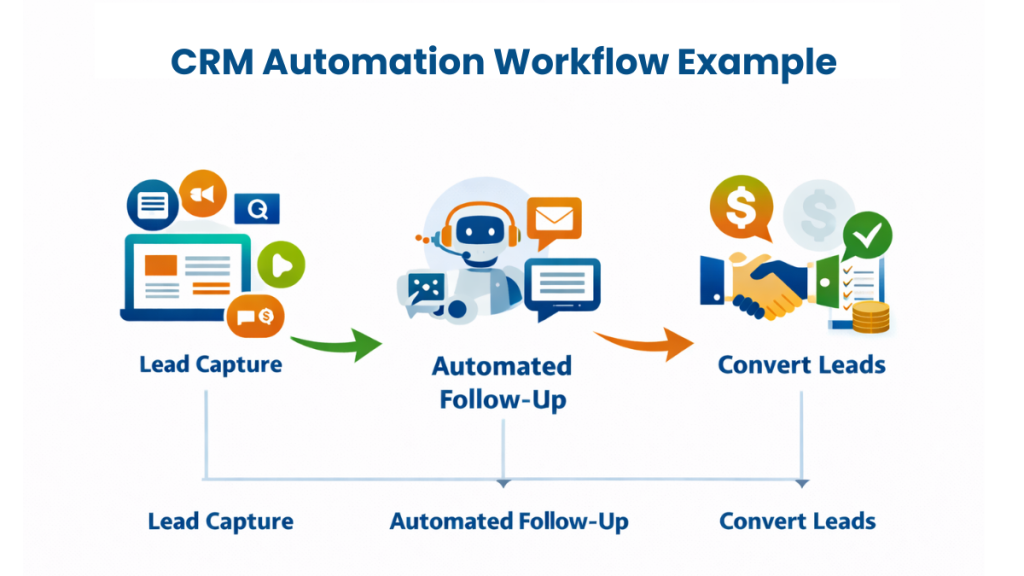
A business generating 50 leads per week cannot manually follow up with every lead.
Automation becomes essential.
This is why many growing businesses eventually upgrade to automation-focused platforms rather than staying on free CRMs.
How Much CRM Software Really Costs for Small Businesses
For most service businesses, realistic CRM pricing falls into three categories.
Budget CRM
$10 – $30 per month
Basic contact tracking and pipelines.
Good for freelancers and early-stage businesses.
Growth CRM
$50 – $150 per month
Includes automation, email integrations, and reporting.
Most small businesses land in this range.
Automation CRM
$97 – $497 per month
These platforms combine CRM, marketing automation, funnels, and messaging tools.
For businesses that rely heavily on lead generation and follow-up, these systems often replace multiple tools.
If you’re evaluating different options, the article Compare CRM Software walks through the major platforms businesses use today.
Choosing the Right CRM Pricing Model
Instead of focusing only on the price number, look at how the pricing scales.
Ask three questions.
- Will the price increase as my team grows?
- Will the price increase as my contacts grow?
- Will I need extra tools to make this CRM useful?
The cheapest CRM is often the one that replaces the most software.
That’s why many businesses move away from simple CRMs toward platforms that combine automation, marketing, and lead management.
Conclusion
Understanding CRM pricing is less about the number on the pricing page and more about the structure behind it.
Per-user systems scale with team size.
Contact-based systems scale with lead volume.
Automation platforms bundle everything into one price.
For small businesses generating leads online, automation features usually deliver the biggest return.
The right CRM isn’t just about organizing contacts.
It’s about making sure every lead gets followed up automatically.
And when that happens, the cost of the CRM usually becomes insignificant compared to the revenue it helps generate.
FAQ
How much does CRM software cost per month?
CRM pricing typically ranges from $10 per user for basic tools to $97–$497 per month for automation-focused platforms.
What is the average CRM pricing for small businesses?
Most small businesses spend between $50 and $150 per month on CRM software depending on features and team size.
Why do CRM prices vary so much?
CRM pricing varies because some tools charge per user, some charge per contact, and others bundle automation features into flat monthly plans.
Is free CRM software enough?
Free CRMs work for small teams but usually lack automation. Businesses generating consistent leads often upgrade to paid plans.
Suggested Reads
CRM Packages for Small Businesses
Best Free CRM for Small Business
Compare CRM Software
Best CRM With Automation for Small Businesses
GoHighLevel Hidden Costs (2026)