
Choosing the right small business CRM can make the difference between constantly chasing leads and having a predictable flow of customers every month.
Most small businesses don’t need a complicated CRM. They need a simple system that tracks leads and follows up automatically.
Choosing the right CRM can make a big difference for a small business. The right system helps you track leads, follow up consistently, and turn enquiries into customers.
GoHighLevel stands out because it combines CRM, automation and funnels in one system, which most small businesses eventually need anyway.
The problem is that most CRM comparisons focus on big companies. This guide focuses on CRM platforms that actually make sense for small businesses.
If you’re looking for a CRM that handles leads, automation, and follow-ups in one system, this is where to start.
What a Small Business CRM Should Actually Do
A real small business CRM isn’t just a contact list.
It should handle the full customer journey from first enquiry to repeat business.
For most small businesses that means:
Lead capture from forms or websites
Automated follow-up messages
Pipeline tracking
Appointment booking
Customer records
Email and SMS communication
Many CRMs only do part of this. That usually means buying extra tools and paying multiple subscriptions.
The best systems combine everything in one place.
If automation is important to you, you should read our guide on Best CRM With Automation for Small Businesses.
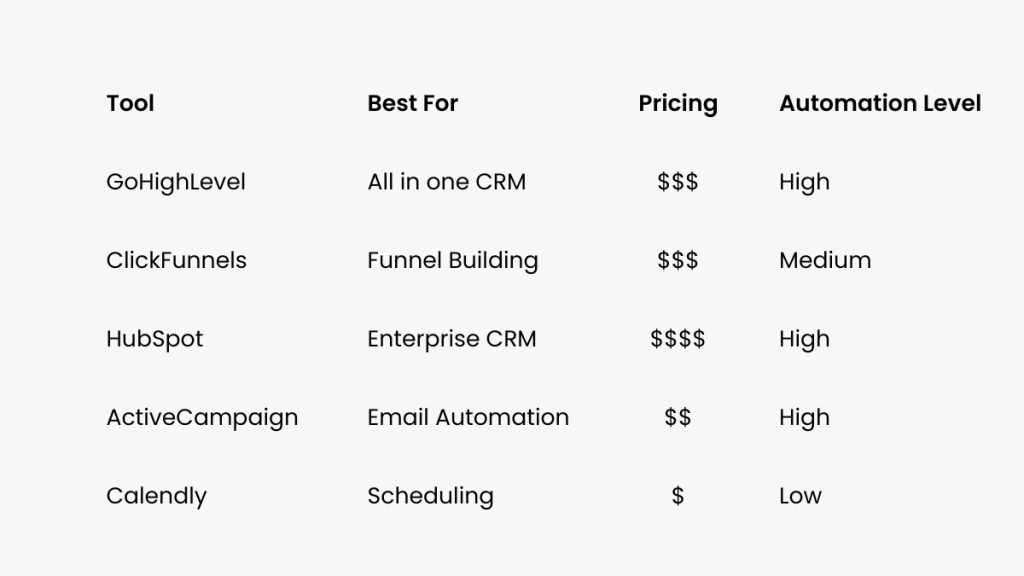
Best Small Business CRM Software Compared
| CRM | Best For | Starting Price | Automation | Pipeline Tools |
|---|---|---|---|---|
| GoHighLevel | All-in-one automation CRM | $97/mo | Advanced | Full pipelines |
| HubSpot | Simple beginner CRM | Free–$50/mo | Basic | Basic pipelines |
| Zoho CRM | Budget CRM users | $14/mo | Moderate | Good pipelines |
| Pipedrive | Sales tracking | $14/mo | Limited | Excellent pipelines |
| Monday CRM | Visual workflows | $12/mo | Moderate | Good pipelines |
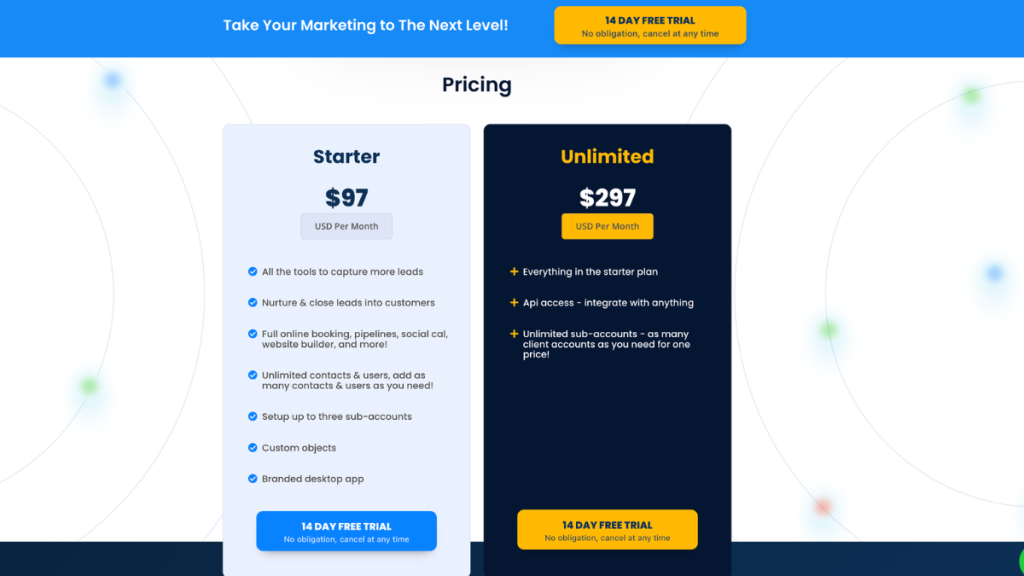
If you want a full breakdown of costs, see our detailed GoHighLevel Pricing Explained guide.
Most small businesses end up choosing between a simple CRM and an automation platform.
That decision usually determines whether your system actually saves time or creates more work.
Before choosing any CRM, it’s worth understanding potential add-on charges. We break that down in GoHighLevel Hidden Costs.
1. GoHighLevel (Best All In One CRM)
If you’re looking for a small business CRM that replaces multiple tools, GoHighLevel is usually the strongest option. For a deeper breakdown of the advanced features, see the GoHighLevel Pro Plan Review.
Instead of combining a CRM, email platform, booking software, funnel builder and automation tools, everything runs inside one dashboard.
That matters because small businesses rarely have time to manage five different systems.
GoHighLevel includes:
Lead pipelines
Automated SMS and email follow-ups
Website forms
Landing pages
Appointment scheduling
Workflows and automation
Contact management
This makes it closer to a business operating system than a traditional CRM.
2. HubSpot (Best Beginner CRM)
HubSpot is often the first CRM small businesses try.
The free version is easy to use and works well if you only need contact management and simple tracking.
The problem is that automation features are limited unless you upgrade to paid plans.
Many businesses eventually outgrow HubSpot and move to something more automated.
HubSpot works best if:
You only need a basic CRM
You have very few leads
You don’t need automation
3. Zoho CRM (Best Budget CRM)
Zoho CRM is popular with small businesses because it offers a lot of features at a low price.
It includes:
Lead tracking
Email integration
Reports
Pipelines
The downside is that the interface can feel complicated compared with simpler systems.
Zoho works best if price is the main concern.
4. Pipedrive (Best Sales Pipeline CRM)
Pipedrive is designed specifically for sales pipelines.
It is one of the easiest CRMs for tracking deals and opportunities.
But it focuses heavily on sales tracking rather than automation.
Most businesses still need extra tools for:
Email automation
Forms
Scheduling
Marketing
That increases overall cost.
5. Monday CRM (Best Visual CRM)
Monday CRM focuses on visual workflows and team collaboration.
It works well for teams managing projects alongside sales.
But automation features are more limited than dedicated marketing CRMs.
Why Most Small Businesses Need Automation
A CRM without automation still requires manual follow-up.
That usually means:
Forgetting leads
Slow responses
Lost opportunities
Automation changes that.
Instead of manually responding to every enquiry, a CRM can:
Send instant replies
Book appointments automatically
Follow up with leads
Send reminders
Re-engage old contacts
That is why automation CRMs are becoming more popular with small businesses.
What Makes GoHighLevel Different
Most CRMs manage contacts.
GoHighLevel manages the entire customer journey.
Instead of needing:
Email software
SMS software
Funnels
Booking software
CRM
Everything runs inside one system.
That usually means lower costs and simpler setup.
Try GoHighLevel Free for 14 Days
Real Example, Local Service Business
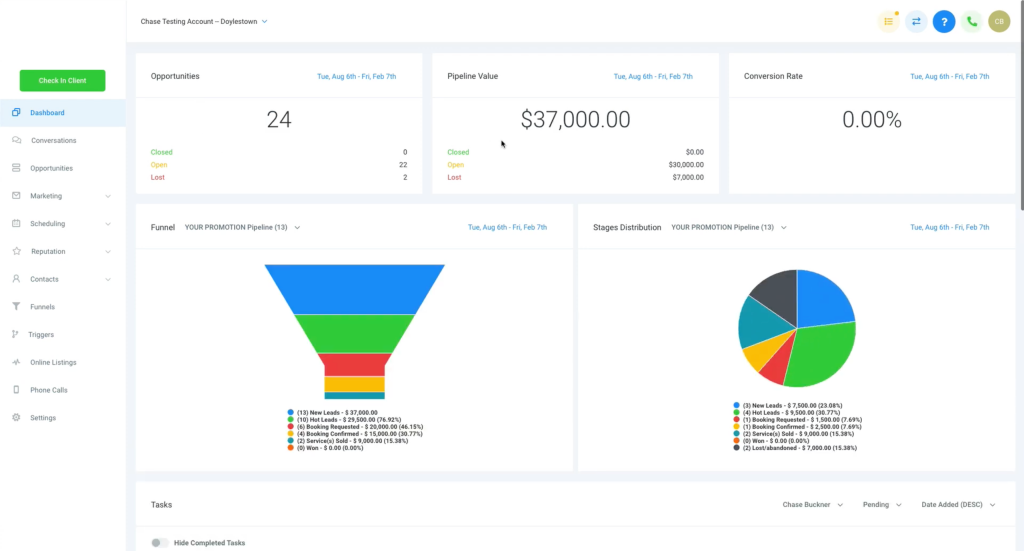
A typical service business might use a CRM like this:
A visitor fills out a website form.
The CRM automatically:
Sends a reply within seconds
Offers appointment times
Books the job
Sends reminders
Follows up after the visit
Without automation, this requires constant manual work.
With the right CRM, it runs automatically.
How to Choose the Right Small Business CRM
Many small businesses also need scheduling tools. We compared the Best Appointment Booking Software for Small Businesses here.
The best CRM depends on how you run your business.
If you mainly track deals, a pipeline CRM works well.
If you want automation and lead generation, an all-in-one platform is usually better.
Most small businesses benefit from fewer tools rather than more.
Simple systems get used.
Complicated systems get ignored.
Is GoHighLevel Worth It for Small Businesses?
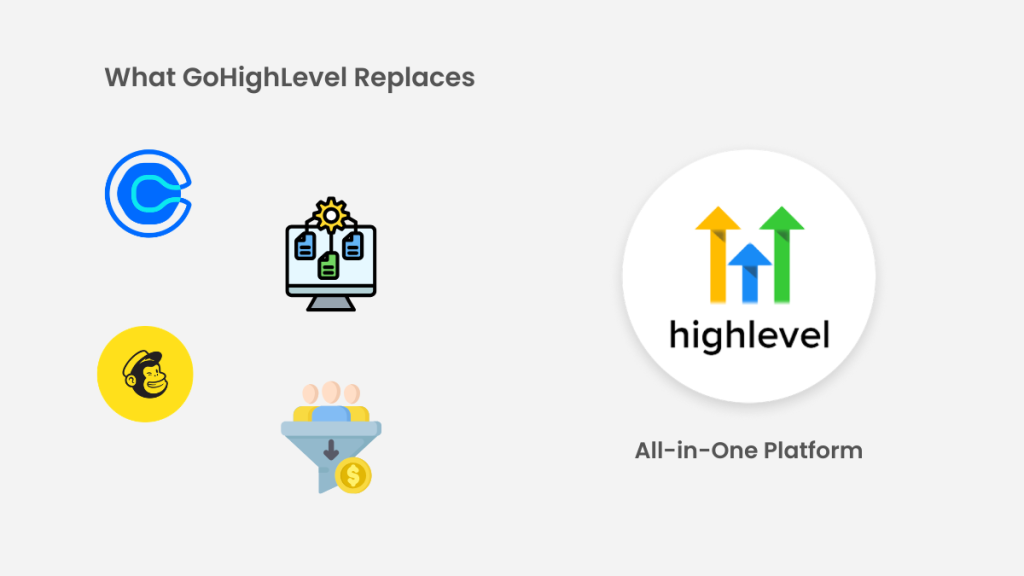
For businesses that want automation, GoHighLevel is usually worth the cost.
It replaces multiple tools and reduces manual work.
Many small businesses spend more than $97/month on separate systems without realising it.
When everything runs in one place, management becomes much easier.
Start Your Free GoHighLevel Trial
FAQ
Which CRM is best for small businesses?
The best small business CRM depends on what you need. Businesses that want automation usually prefer all-in-one systems like GoHighLevel, while businesses that only need contact management often choose simpler CRMs like HubSpot or Zoho.
Which CRM is easiest to use?
HubSpot is usually considered the easiest CRM for beginners because the interface is simple and the free plan is easy to set up.
Automation-focused CRMs take longer to learn but save more time long term.
Is there a free CRM for small businesses?
Yes. Some CRMs offer free plans including HubSpot and Zoho.
Free CRMs usually limit automation features, which is why many businesses eventually upgrade to paid platforms.
What CRM do small businesses use most?
Popular small business CRM platforms include:
- GoHighLevel
- HubSpot
- Zoho CRM
- Pipedrive
Most businesses choose based on automation needs rather than price alone.
Is CRM difficult to learn?
Most modern CRM systems are designed to be simple to use.
Basic features like storing contacts and tracking leads can usually be learned in a few hours. Automation features take longer but save significant time once set up.
Does Microsoft have a CRM?
Yes. Microsoft offers a CRM called Dynamics 365.
It is designed mainly for medium and large businesses and is usually more complex and expensive than typical small business CRMs.
What is the best CRM for beginners?
Beginner-friendly CRMs usually include simple dashboards and easy setup.
HubSpot is often recommended for beginners, while automation CRMs like GoHighLevel are better for businesses planning to scale.
Is a CRM worth it for a small business?
A CRM is usually worth it if your business handles regular enquiries or repeat customers.
Even simple automation like follow-up messages and reminders can increase conversions and reduce manual work.
Best Reads
Best CRM With Automation
GoHighLevel Pricing
GoHighLevel Hidden Costs
Best GoHighLevel Alternatives