
If you’ve ever Googled “virtual assistant rates” you’ve probably noticed something frustrating.
One website says VAs charge £15/hour. Another says £80/hour. Then you see American VAs charging $100/hour and you start wondering if you’re doing something wrong, or if UK clients just don’t pay.
Here’s the truth.
Virtual assistant rates in the UK and US are different, but not because UK clients are cheap. The real difference comes down to how VAs position themselves, what services they sell, and whether they’re charging like a freelancer or charging like a specialist.
Because the VAs earning premium rates aren’t winning by working harder.
They’re winning by packaging smarter.
This guide breaks down the real numbers for UK vs US VA rates in 2026, what influences pricing, and how you can charge more without sounding unrealistic or scaring clients off.
Quick Answer, Virtual Assistant Rates US vs UK in 2026?
In 2026, most virtual assistant hourly rates fall into these ranges:
US virtual assistant rates: roughly $20 to $75 per hour
UK virtual assistant rates: roughly £15 to £50 per hour
Premium VAs in both countries can charge higher, especially if they specialise in automation, CRM management, funnels, email marketing, or high-level operational support.
But if you’re charging low right now, don’t panic.
Rates aren’t just about location. They’re about positioning and the type of client you attract.
UK vs US VA Rates Which Actually Pays More?
The biggest difference between UK and US pricing isn’t the country.
It’s the market culture.
US business owners are more used to paying premium prices for marketing support, consulting, and systems. UK business owners often expect “help” at a lower cost, especially if they’re small local businesses.
But the gap isn’t as huge as people think.
The UK has plenty of clients who will pay premium rates. They’re just not hiring “admin VAs”. They’re hiring specialists.
If you sell basic admin tasks, you’ll usually be priced as admin.
If you sell something tied to revenue, you can charge more regardless of where you live.
Typical Virtual Assistant Rates in the UK (2026)
Most UK VAs sit in these ranges:
Beginner / general admin VAs: £15 to £25/hour
Intermediate VAs: £25 to £40/hour
Specialist VAs (automation, CRM, funnels): £40 to £80/hour
Agency-level systems support: £80+/hour (or monthly retainers)
The most important thing to understand is that hourly pricing isn’t always the best way to measure value.
Some of the highest-paid VAs in the UK don’t even use hourly rates anymore. They sell packages and retainers instead.
That’s where the money is.
Typical Virtual Assistant Rates in the US (2026)
US VAs tend to price slightly higher, especially in marketing-adjacent niches.
Beginner VAs: $20 to $35/hour
Intermediate VAs: $35 to $55/hour
Specialist VAs: $55 to $100/hour
High-level OBM style roles: $100+/hour
Again, the real divide isn’t the country. It’s whether the VA is seen as “support” or “strategy and systems.”
The Real Reason Some VAs Charge £15/hour and Others Charge £80/hour
This is where most VA pricing posts get it wrong.
They act like your rate is based on your experience level alone.
But that’s not what drives pricing.
Pricing is driven by what problem you solve.
A VA who manages calendars and emails is useful, but it’s not a revenue-critical role. Clients will always try to keep that cost low.
But a VA who can set up lead follow-up automation, manage a CRM pipeline, and increase booked calls? That VA isn’t “help”. That VA is a business asset.
Here’s a real example.
If a client is spending £1,500/month on Meta ads and they’re missing leads because nobody follows up, they’re literally burning money.
If you fix that with an automated follow-up system, your £1,000 retainer doesn’t feel expensive anymore. It feels like common sense.
That’s why specialist VAs can charge premium rates fast.
Why Most VAs Undercharge (Even When They’re Good)
Most VAs undercharge for one main reason.
They price based on what they think clients will accept, not based on what the work is worth.
So they end up doing £800/month worth of work for £300/month, then wondering why they’re exhausted and broke.
If you’re doing that right now, it’s not because you’re bad at business.
It’s because nobody teaches VAs how to package properly.
You don’t need to raise your rate overnight.
But you do need to stop selling unlimited “support” at a low price.
That’s the fastest path to burnout.
What You Should Charge as a VA (Hourly vs Retainer vs Packages)
Hourly rates are the most common, but they’re also the easiest to undervalue.
Retainers and packages usually lead to higher income because clients pay for outcomes and availability, not minutes.
Here’s a more realistic way to think about VA pricing.
Hourly pricing (good for beginners, not great long-term)
Hourly rates can work when you’re still building confidence and client experience.
But hourly pricing caps your income. It also makes clients focus on time instead of results.
The moment a client asks “how many hours will that take?” you’re already negotiating against yourself.
Monthly retainers (the best model for stable income)
Retainers are what most professional VAs move into once they have a niche.
They give you predictable monthly income and let clients budget properly.
A retainer also positions you as a partner rather than “someone doing tasks”.
If your client is paying £1,000/month for ads but still missing leads because nobody follows up, your £1,200 retainer suddenly makes sense.
Package pricing (the premium model)
Packages are the best model for high-paying clients.
Instead of selling “VA support”, you sell a specific system or result.
For example:
- CRM setup package
- onboarding automation package
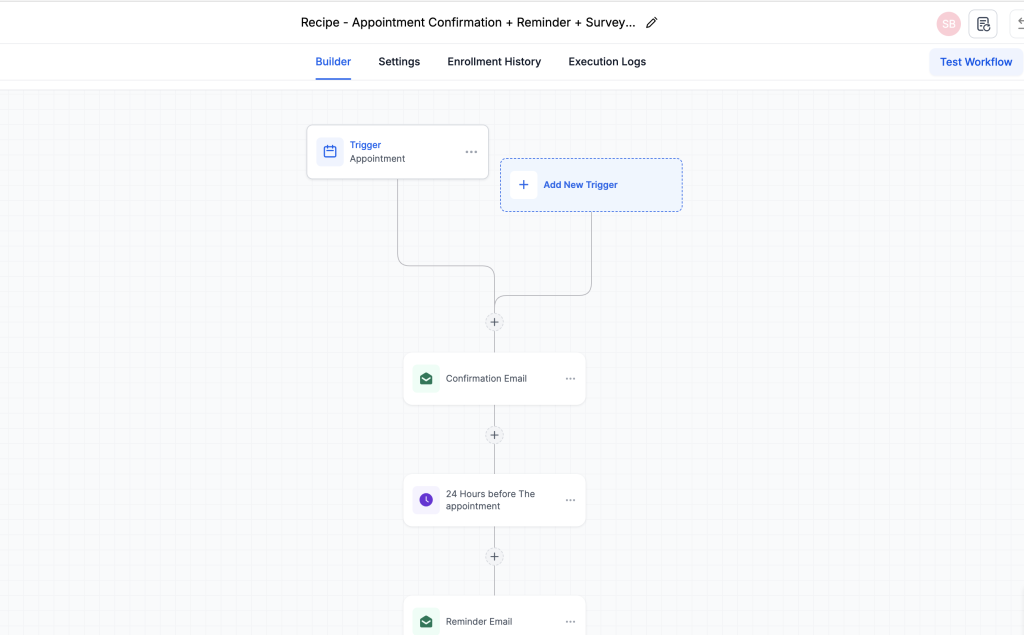
- appointment booking + reminder system
- lead follow-up automation package
That type of offer is easier to justify at £800 to £2,000 than “10 hours of VA support.”
Because it sounds like a product.
And products sell.
The Fastest Way to Charge More (Without Losing Clients)
Most VAs think charging more means “finding richer clients.”
Sometimes, yes.
But most of the time, the fastest way to increase your rates is simply changing how you describe what you do.
Instead of saying:
“I manage inboxes and scheduling.”
You say:
“I help businesses stop losing leads by building follow-up systems and keeping their pipeline organised.”
That shift changes everything.
It changes the client you attract. It changes the type of conversation you have. And it changes what your pricing feels reasonable for.
Because now you’re tied to outcomes.
The Skill That Raises Your VA Rates the Fastest (Automation + CRM)
If you want one skill that consistently increases VA pricing, it’s automation.
Not because automation is magical, but because it solves expensive problems.
Automation reduces admin time, speeds up lead response, improves booking rates, and stops businesses from dropping leads.
That’s why tools like GoHighLevel are becoming one of the fastest paths for VAs to move into premium pricing.
GoHighLevel lets you manage funnels, CRM pipelines, email follow-up, SMS reminders, booking calendars, and onboarding systems in one platform.
So instead of being “a VA who uses tools”, you become the person who builds the system.
And businesses pay for systems.
VA Pricing Examples That Work in the UK and US (Realistic Numbers)
Here are realistic examples that work in both markets.
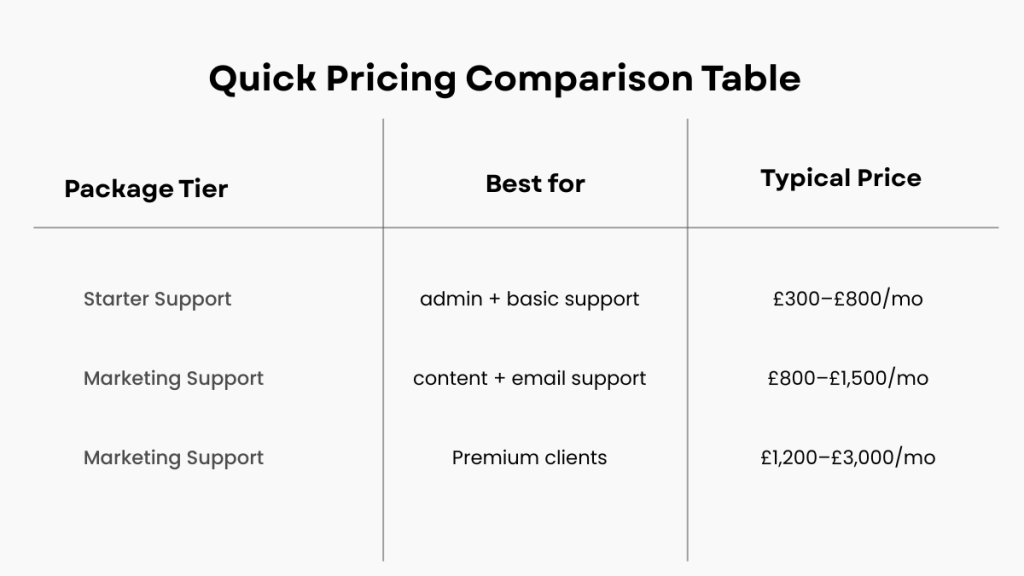
Example 1, Admin support retainer
This is your entry-level monthly package.
£300 to £800/month (UK)
$400 to $1,000/month (US)
This tier should be limited. If it’s unlimited support, you’ll regret it.
Example 2, Marketing support retainer
This is for VAs supporting email marketing, content scheduling, lead magnets, and campaign admin.
£800 to £1,500/month (UK)
$1,000 to $2,000/month (US)
This tier is where you start working with coaches and consultants.
Example 3, Automation + CRM management package
This is where premium VAs live.
£1,200 to £3,000/month (UK)
$1,500 to $4,000/month (US)
Clients pay this because it replaces chaos.
If you’re running their follow-up systems, pipeline tracking, booking automation, and onboarding workflows, you’re doing work that directly impacts revenue.
UK vs US, Which Market is Easier to Charge Premium Rates In?
The US is generally easier for premium pricing because clients are more used to paying for marketing systems.
But the UK still has premium clients. They’re just harder to find if you’re marketing yourself as “a VA who helps with admin.”
In the UK, premium clients are more likely to come from:
- agencies
- coaches and consultants
- lead generation businesses
- service businesses running ads
Those clients care about conversion and follow-up, not admin tasks.
So if you want UK clients to pay US-level rates, your service needs to feel like a business upgrade.
Not a helper role.
How to Increase Your VA Rate Without Sounding Awkward
Here’s the simplest approach.
Don’t say:
“I’m increasing my hourly rate.”
Say:
“I’ve moved to package pricing.”
Package pricing feels normal in business. Hourly increases feel personal.
If an existing client is paying you £20/hour and you want to move up, offer them a transition option:
- keep them on the old rate for 30 days
- then move them into a retainer or package
Most clients won’t leave if you position it correctly.
The ones who leave are usually the ones who were never going to pay you properly anyway.
What to Do Next If You Want Higher VA Rates
If you want higher rates, you need to make one decision.
Are you staying in admin support?
Or are you moving into systems and automation?
Because that choice determines your income ceiling.
You don’t need 10 new skills. You need one high-value niche and a clear package offer.
If you want a simple direction, go toward CRM + automation support. That’s where demand is rising fastest and where clients pay premium retainers.
FAQ
What is the average virtual assistant rate in the UK?
Most UK VAs charge between £15 and £50 per hour depending on skill level and niche.
What is the average virtual assistant rate in the US?
Most US VAs charge between $20 and $75 per hour, with specialists charging more.
Should I charge hourly or monthly as a VA?
Monthly retainers are usually better for stable income. Hourly is fine when starting out, but packages and retainers scale better.
How can I charge more as a virtual assistant?
Specialise in higher-value services like CRM management, automation, funnels, email marketing systems, and lead follow-up.
Can a VA charge £60/hour?
Yes, but usually only if they offer specialist services tied to revenue or automation systems.
Final Verdict, UK vs US VA Rates Don’t Matter as Much as Your Positioning
Yes, US VAs often charge higher rates than UK VAs.
But the bigger truth is this:
The highest-paid VAs in both countries aren’t charging more because of where they live. They’re charging more because they sell specialist services that businesses see as valuable.
If you want to charge premium rates, stop selling “support” and start selling systems.
That’s how you go from £20/hour to £50/hour and beyond.
And if you want one platform that makes premium VA packages easier to deliver, GoHighLevel is one of the best tools to learn.
Related Virtual Assistant Guides
Virtual Assistant Pricing That Doesn’t Undersell You
Can a Virtual Assistant Earn £50/hour?