
Virtual assistant pricing is one of the biggest factors that determines whether you stay stuck at £20/hour or build a real business. Let’s be honest.
Most virtual assistants aren’t undercharging because they don’t have skills. They’re undercharging because they’re pricing themselves like they’re selling “help”, instead of selling outcomes.
And once you’re stuck in the low-price bracket, it’s hard to climb out.
You attract clients who nitpick. Clients who want “just one more thing”. Clients who treat you like an expense instead of an asset. You end up working harder for less money, and the worst part is you start thinking that’s normal.
It isn’t.
If you want to earn premium rates as a VA in 2026, you need to stop pricing like a beginner. That doesn’t mean becoming greedy. It means charging in a way that matches the actual value you’re creating.
This post breaks down exactly how to price your VA services so you can earn more without feeling like you’re ripping people off.
And yes, I’ll show you real pricing examples.
Quick Answer, How Do You Stop Underselling Your VA Services?
If you want the short answer, here it is:
You stop underselling when you stop charging for time and start charging for a system.
Hourly pricing makes you look like a task-doer. Packages and retainers make you look like a specialist.
And specialists get paid more.
If you want premium clients, your pricing has to feel like it belongs in a business conversation, not a side hustle conversation.
The Pricing Mistakes That Keep VAs Stuck
Most virtual assistants don’t undercharge because they lack skill.
They undercharge because of how they position what they do.
Here are the real mistakes.
1. Selling tasks instead of outcomes
If you sell inbox management, scheduling, uploading blogs and admin support, clients compare you to the cheapest person who can do those tasks.
If you sell improved follow-up, higher booking rates, cleaner sales pipelines and better lead conversion, you’re no longer being compared to entry-level VAs.
You’re solving revenue problems.
That changes the price conversation immediately.
2. Charging hourly without leverage
Hourly pricing caps your income and signals “time for hire.”
It also forces clients to think in terms of cost per hour instead of value created.
If you spend 10 hours setting up a system that generates £5,000 in extra revenue over six months, your hourly rate becomes irrelevant.
But if you bill strictly by the hour, you’ve already framed your work as time, not transformation.
3. Competing on price instead of positioning
Many VAs lower their rates because they think the market is saturated.
It isn’t saturated at the specialist level.
It’s saturated at the general admin level.
There’s a big difference.
A VA offering “general support” will always compete on price.
A VA offering CRM setup, automation, booking systems, or conversion improvements competes on impact.
4. Not packaging services clearly
Unclear offers create insecure pricing.
If you can’t explain what someone gets, you’ll default to charging less.
When your service is packaged clearly, for example:
CRM setup
Automated follow-up sequences
Appointment reminders
Monthly performance tracking
It becomes easier to attach a project price or retainer.
Clarity increases confidence.
Confidence increases pricing.
5. Talking about tools instead of results
Clients don’t care that you use five different platforms.
They care about:
More booked calls
Fewer no-shows
Better visibility on revenue
Less chaos in their pipeline
When you talk about features instead of outcomes, your pricing sounds inflated.
When you talk about measurable business improvements, it sounds justified.
Most VAs aren’t underpaid because clients are cheap.
They’re underpaid because they’re positioned as support instead of leverage.
Fix the positioning and the pricing follows.
The 3 Virtual Assistant Pricing Models (And the One That Scales)
There are three main ways VAs price their services. All of them can work, but one is clearly the best if you want consistent income.
1. Hourly pricing (the trap most VAs start in)
Hourly pricing feels safe at first because it’s simple. You do the work, you invoice for time.
The problem is it caps your income and attracts clients who want maximum work for minimum spend.
Hourly rates also make you look replaceable. A client can compare you to someone on Fiverr and suddenly you’re fighting a price war.
Hourly is fine when you’re starting out, but it’s not where you want to stay.
2. Monthly retainer (best for steady income)
Retainers are where most professional VAs end up.
Instead of selling hours, you sell availability and ongoing support.
Retainers feel more “business-like”, and they also stop you constantly chasing new clients.
If your goal is stability, retainers are your best friend.
3. Package pricing (the best model for premium clients)
Package pricing is what premium VAs use.
Instead of saying “I’ll help with admin”, you say:
“I’ll set up your onboarding system.”
“I’ll build your lead follow-up workflow.”
“I’ll manage your CRM pipeline and improve conversions.”
That sounds like a service. Not a job.
Packages also let you charge based on the outcome, not the minutes it took.
That’s the model that scales.
Strong virtual assistant pricing is less about confidence and more about positioning and packaging your services correctly.
The Fastest Way to Justify Premium VA Pricing
If you want to charge premium rates, your pricing needs a reason that makes sense to a business owner.
The fastest way to do that is to connect your offer to one of these outcomes:
- Leads get responded to faster
- Booked calls increase
- No-shows decrease
- Follow-up becomes consistent
- The business runs smoother without hiring staff
Because those outcomes are measurable.
A client might argue about paying £1,200/month for “VA work”.
But they won’t argue about paying £1,200/month to stop losing leads they already paid for.
That’s the mindset shift.
Where GoHighLevel Fits (And Why It Makes Premium Packages Easier to Sell)
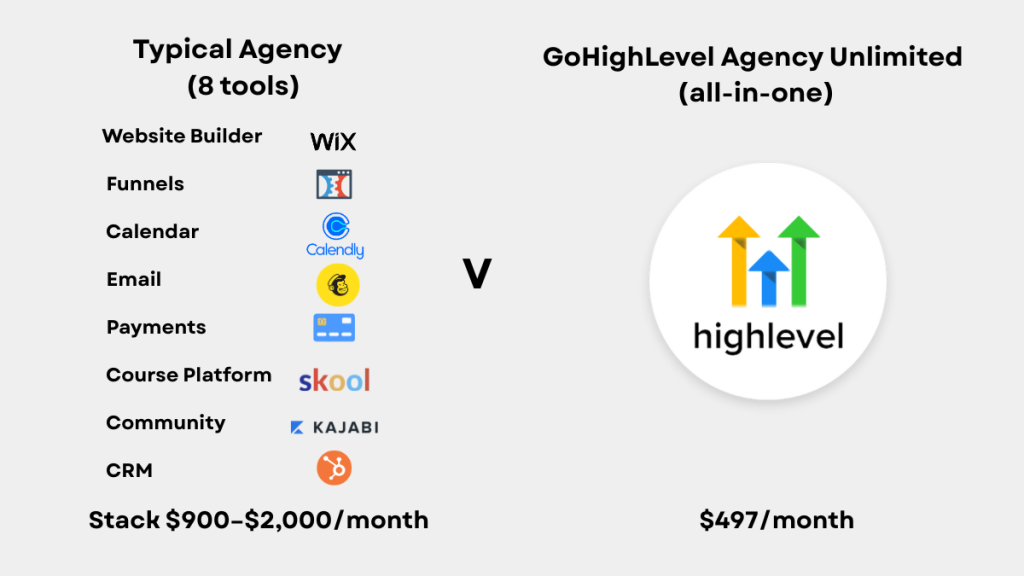
If you’re offering automation and CRM services, you need a platform that can actually run the system.
Trying to build premium offers across 5 different tools is messy. You end up with broken integrations, Zapier issues, logins everywhere, and clients who don’t understand what’s happening.
GoHighLevel makes premium packages easier because it combines everything into one place.
Funnels, landing pages, forms, CRM pipelines, email automation, SMS follow-up, appointment booking, and client communication.
That means you can build systems that feel clean and professional.
And when the system looks professional, your pricing feels more believable.
What to Say When Clients Question Your Pricing
This is where most VAs panic.
A client asks, “Why is it so expensive?” and suddenly you start explaining yourself like you’re applying for a job.
Don’t.
Premium pricing needs premium language.
Here are three scripts you can use.
If they ask why you don’t charge hourly
You can say
“I don’t charge hourly because the goal isn’t to keep you paying for time. The goal is to build a system that works consistently. My pricing is based on the outcome, not how long it takes me to set it up.”
If they ask what they’re actually paying for
Say
“You’re paying for the system, not admin tasks. The setup is designed to stop leads slipping through the cracks and make follow-up automatic, so you get more booked calls without chasing people manually.”
If they say they can find someone cheaper
Say
“You probably can. But cheaper usually means someone doing tasks, not someone building a system. If you want someone who can run your CRM and automation properly, that’s a different level of service.”
That last sentence is important. It separates you from basic VAs without sounding rude.
Why Cheap Clients Are Usually the Real Problem
This is something most VAs learn the hard way.
Cheap clients don’t just pay less.
They usually demand more, question everything, and drain your energy.
Premium clients aren’t always easier, but they treat the relationship like business. They pay on time. They respect boundaries. They care about results.
So if you’re constantly attracting low-budget clients, it’s not always a marketing problem.
It’s often a pricing problem.
Because pricing is a filter.
A Simple Pricing Structure That Converts (Without Overcomplicating It)
If you want a simple way to package your services, use this structure:
Starter Support
Marketing Support
Automation + CRM Package
That’s it.
You don’t need 12 packages. You don’t need fancy names. You need clarity.
Most clients don’t want options. They want the right option.
When your pricing is simple, it feels confident. And confident pricing sells.
FAQ
How much should a virtual assistant charge per hour in 2026?
Most VAs charge anywhere from £15/hour to £50/hour depending on skill level and niche. Automation and CRM specialists often charge more because the work is tied to revenue.
Should VAs charge hourly or monthly?
Monthly retainers are usually better long-term because they create consistent income. Hourly can work when you’re starting out, but it often caps your earnings.
How do I charge more as a VA without losing clients?
By packaging services into outcomes and specialising. Clients pay more when they understand what they’re getting and why it matters.
Do I need tech skills to sell automation packages?
You don’t need to be a developer. Most automation tools are drag-and-drop. The real skill is understanding business workflows and building systems that save time or increase conversions.
Final Verdict, Stop Charging Like a Beginner
If you want to earn more as a VA, you don’t need to “work harder” or add more random skills.
You need to stop selling time.
Premium pricing comes from selling packages that solve real business problems. And the best-paying VA niche right now is automation and CRM work, because it’s directly connected to money.
If you want higher retainers, build offers around systems, follow-up, pipelines, and onboarding.
That’s how you stop underselling yourself.
And that’s how you start attracting clients who don’t argue over price.
Related Virtual Assistant Guides
High Paying Virtual Assistant Skills
GoHighLevel vs ClickFunnels
Virtual Assistant Rates UK vs US