
Choosing the right CRM for consultants can make a major difference in how consulting businesses manage leads, schedule discovery calls, and convert enquiries into long-term clients.
Many consultants begin their business with simple tools like email, spreadsheets, and calendars. At the start, this works fine. But once enquiries start arriving consistently, keeping track of conversations, follow-ups, and potential clients quickly becomes difficult.
This is where CRM software becomes valuable.
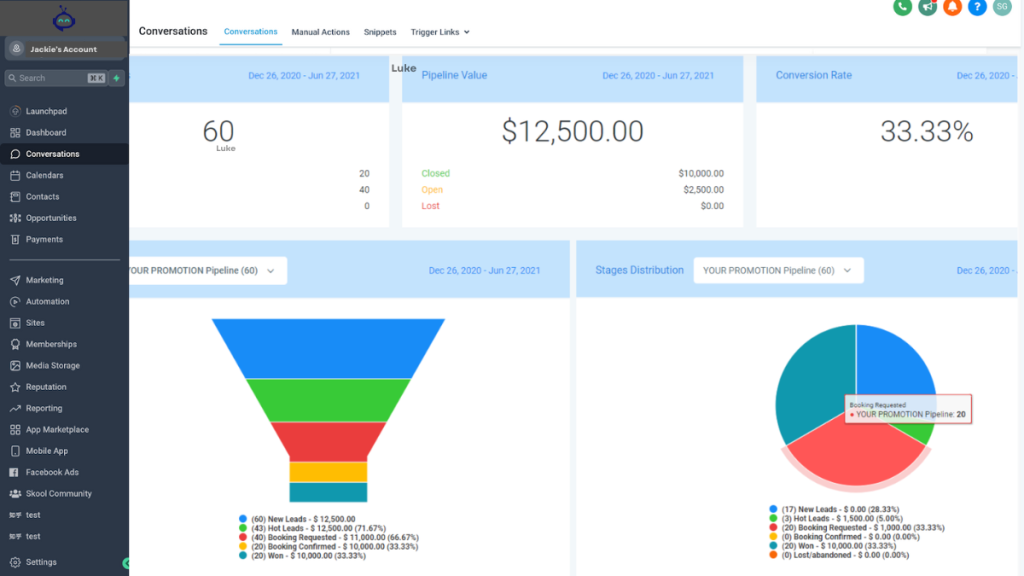
A good CRM for consultants centralises leads, contact history, follow-ups, and client pipelines inside a single system. Instead of juggling multiple tools, consultants can track their entire sales process in one dashboard.
If you’re still exploring the basics of CRM systems, it helps to understand how customer relationship management works in small businesses by reading what a CRM for small business actually does.
This guide explains how CRM tools help consultants manage clients more effectively, automate follow-ups, and scale their consulting business without losing opportunities.
Quick Summary
Choosing a CRM for consultants helps organise client relationships, track leads, and automate repetitive tasks that would otherwise consume valuable time.
Consultants often deal with multiple potential clients at different stages of the decision process. A CRM allows them to track conversations, schedule follow-ups, and keep notes about each opportunity.
Many consultants also use CRM tools to automate onboarding processes, appointment reminders, and email sequences that nurture prospects until they are ready to work together.
Modern CRM platforms frequently combine automation, pipelines, and communication tools in a single dashboard. This removes the need for multiple disconnected apps.
For consultants who rely on steady client acquisition, having a CRM system in place can significantly improve lead conversion and client management.
Why Consultants Eventually Need CRM Systems
Consulting businesses grow through relationships and conversations.
Leads typically arrive through referrals, website enquiries, social media, or discovery calls. Without a structured system, it becomes easy to lose track of these conversations.
A CRM for consultants helps organise these interactions.
Instead of trying to remember who requested a proposal or which client asked for a follow-up call, everything is tracked automatically inside the CRM.
Many consultants experience a turning point where they begin asking questions like:
Did I follow up with that potential client?
Which prospects booked discovery calls this week?
Who requested information but hasn’t responded yet?
A CRM system answers these questions instantly.
Consultants often adopt similar automation strategies used in other service-based industries. For example, many lead management workflows are similar to those described in CRM for service businesses, where pipelines help track enquiries through different stages.
Key Features a CRM for Consultants Should Include
Not all CRM platforms are designed with consultants in mind. Some systems are built for large enterprise sales teams and include features that are unnecessary for small consulting businesses.
The best CRM for consultants typically focuses on simplicity and automation.
Lead pipelines
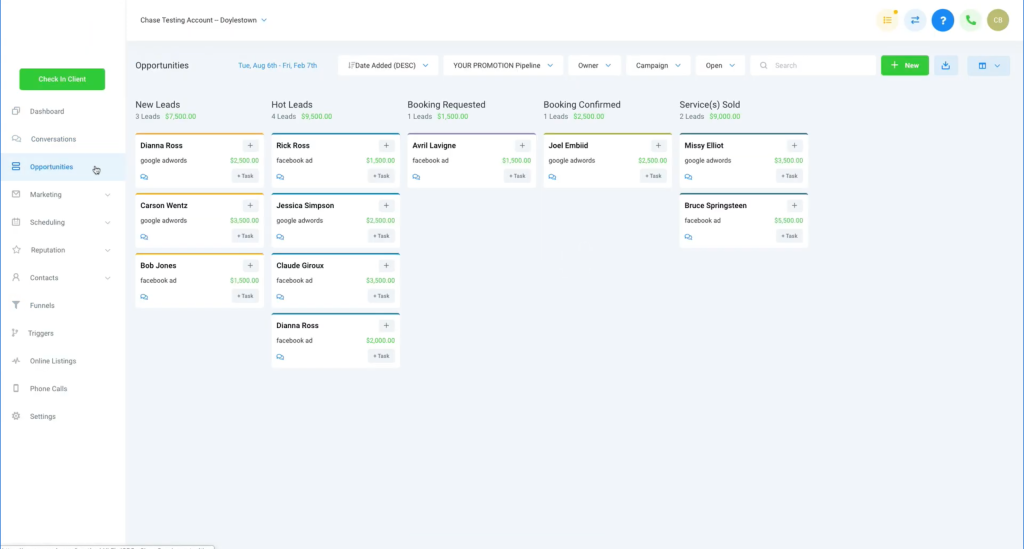
Consultants benefit from visual sales pipelines that show where each prospect sits in the decision process.
Typical stages might include:
Lead enquiry → Discovery call → Proposal sent → Client onboarding → Active client.
Pipelines make it easy to track progress and identify which leads require follow-up.
Appointment scheduling
Consultants frequently rely on discovery calls to qualify potential clients.
CRM platforms that integrate scheduling tools allow prospects to book calls automatically, reducing back-and-forth emails.
Automated follow-ups
Many prospects require multiple touchpoints before they decide to hire a consultant.
Automation tools can send follow-up emails, reminders, and resources that keep consultants top-of-mind.
These automation systems work similarly to those discussed in best CRM with automation for small businesses, where marketing workflows support lead conversion.
Client notes and communication history
Consulting relationships often involve detailed conversations about business challenges, goals, and strategy.
A CRM ensures that all notes, emails, and conversations remain attached to the client profile.
Best CRM Platforms for Consultants
Several CRM platforms work well for consulting businesses. Each offers different strengths depending on the level of automation and integration required.
To help compare the options quickly, here is a simple overview of popular CRM tools used by consultants.
| Platform | Best For | Automation | Pricing |
|---|---|---|---|
| GoHighLevel | consultants & agencies | advanced | $97+ |
| HubSpot | marketing consultants | medium | free+ |
| Zoho CRM | custom workflows | advanced | $20+ |
| ActiveCampaign | email automation | strong | $29+ |
GoHighLevel
GoHighLevel is widely used by consultants who want an all-in-one platform that combines CRM pipelines, automation, email marketing, SMS messaging, and funnel building.
Instead of relying on separate tools for lead management and marketing automation, consultants can run everything inside one system.
This is particularly useful for consultants who offer high-ticket services and need structured onboarding processes.
HubSpot CRM
HubSpot offers one of the most widely used CRM systems with a free starting plan.
It works well for consultants who focus heavily on content marketing and inbound lead generation.
However, advanced automation features are typically available only in paid tiers.
You can compare these systems further in GoHighLevel vs HubSpot.
Zoho CRM
Zoho CRM offers a flexible and highly customisable platform.
Consultants who require complex workflows or integrations often appreciate its customisation options.
However, the learning curve may be steeper compared to simpler CRM tools.
How CRM Automation Helps Consultants Convert More Clients
One of the biggest advantages of using a CRM for consultants is automation.
Manual follow-ups often get delayed when consultants become busy with client work. Automation ensures that every lead receives timely communication.
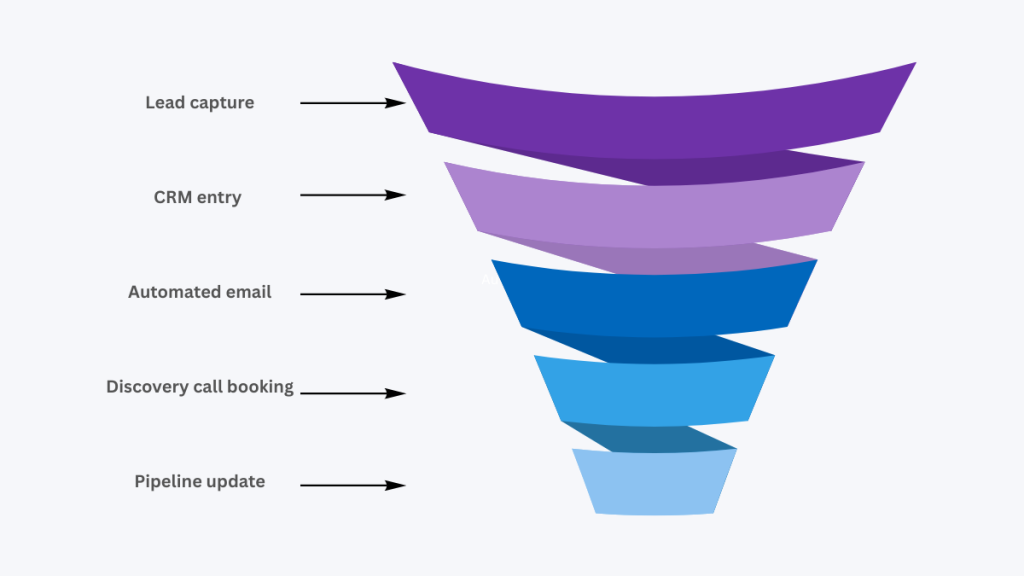
For example, when someone books a discovery call, the CRM can automatically send:
• confirmation emails
• reminder notifications
• follow-up resources
• onboarding instructions
Research on lead response time shows that businesses are far more likely to connect with prospects when they respond quickly to enquiries.
By responding quickly and consistently, consultants increase the likelihood of converting enquiries into clients.
Automation tools also allow consultants to nurture prospects who are not ready to commit immediately.
Choosing the Right CRM for Your Consulting Business
Selecting the best CRM for consultants depends on several practical factors.
Business stage
New consultants may only require basic contact management and scheduling tools.
More established consulting businesses often benefit from automation systems that manage pipelines and marketing campaigns.
Client acquisition strategy
Consultants who rely heavily on content marketing, webinars, or social media funnels may prefer CRM platforms with strong marketing automation features.
Workflow complexity
If your consulting business includes onboarding processes, proposal tracking, and long-term client relationships, a CRM that supports automation workflows can significantly simplify operations.
Conclusion
Choosing the right CRM for consultants allows consulting businesses to manage leads, track conversations, and automate follow-ups in a structured system.
Instead of relying on memory or scattered tools, consultants gain a clear view of their entire client pipeline.
Modern CRM platforms combine automation, scheduling, and client management features that help consultants focus on delivering value rather than managing administrative tasks.
As consulting businesses grow, having a reliable CRM system becomes one of the most valuable tools for managing opportunities and scaling operations.
FAQ
What is the best CRM for consultants?
The best CRM for consultants depends on business needs. Platforms that combine pipelines, automation, and scheduling tools tend to work best for managing consulting leads and client relationships.
Do consultants really need CRM software?
Yes. CRM software helps consultants track conversations, schedule follow-ups, and organise client information in one place.
Is GoHighLevel good for consultants?
GoHighLevel is widely used by consultants and agencies because it combines CRM pipelines, automation workflows, and marketing tools in one platform.
What features should a CRM for consultants include?
Important features include lead pipelines, automated follow-ups, scheduling tools, client notes, and marketing automation.
Suggested Reads
CRM for Service Businesses
Best CRM for Lead Generation
Best CRM With Automation for Small Businesses
GoHighLevel vs HubSpot