
CRM marketing automation refers to software that combines customer relationship management with automated marketing tools such as email campaigns, lead tracking, and pipeline management.
Instead of manually following up with every lead, a CRM for marketing automation can automatically send emails, trigger SMS messages, move contacts through sales pipelines, and track where prospects are in the buying process. Many systems also include funnel builders, campaign automation, and reporting tools in one platform.
Choosing the right CRM for marketing automation has become an important decision for small businesses and agencies in 2026. Most CRMs can store contacts and track deals, but far fewer can automate follow-ups, run marketing campaigns, and manage leads without relying on additional tools.
Quick Summary, Best CRM for Marketing Automation
| CRM | Best For | Starting Price |
|---|---|---|
| GoHighLevel | Agencies and service businesses | $97 |
| HubSpot | Large teams and enterprise CRM | Free / Paid tiers |
| ActiveCampaign | Advanced email automation | $29 |
| ClickFunnels | Funnel-driven marketing | $147 |
A strong CRM for marketing automation should handle email sequences, SMS follow-ups, lead tracking, and funnel management from one dashboard. Otherwise businesses end up paying for several separate platforms and manually connecting them together.
This guide compares the best CRM platforms for marketing automation and explains which types of businesses each system works best for.
If you want a deeper breakdown of CRM costs, see GoHighLevel Pricing Explained
What Makes a Good CRM for Marketing Automation
Marketing automation helps businesses respond to leads faster and maintain consistent follow-ups with potential customers.
A CRM designed for marketing automation should do more than simply store contact details. The most effective platforms combine customer relationship management with automation tools that help businesses capture leads, trigger follow-ups automatically, and track opportunities through the sales pipeline.
When comparing CRM platforms for marketing automation, there are several core features businesses should look for.
• Lead tracking so businesses can see where prospects originate
• Automated follow-up sequences using email or SMS
• Funnel or landing page builders for lead generation
• Appointment scheduling for consultations or sales calls
• Pipeline tracking to monitor deal progress
Without these capabilities, businesses often end up purchasing several separate tools and connecting them through integrations, which increases costs and complexity.
This is where many traditional CRM systems fall short. They can store contacts and track deals, but they often rely on additional marketing platforms to handle automation.
Businesses comparing platforms may also want to explore the best CRM with automation for small businesses, which explains how automation tools are commonly used to manage leads, follow-ups, and customer communication.
| Platform | Best For | Automation Level | Main Limitation |
|---|---|---|---|
| GoHighLevel | All-in-one automation | Very strong | Learning curve |
| HubSpot | Beginners | Medium | Expensive upgrades |
| ActiveCampaign | Email automation | Strong | Needs extra tools |
| ClickFunnels | Funnel automation | Basic | Not full CRM |
Which CRM for Marketing Automation Is Best for Your Business?
Agencies
Platforms like GoHighLevel are often used by agencies because they combine funnel builders, CRM pipelines and automation tools in one system.
Small businesses
Small businesses usually need automation without complicated enterprise tools. Systems like ActiveCampaign or simpler CRM platforms may be a better fit.
Businesses focused on sales funnels
Companies that rely heavily on funnels often prefer tools like ClickFunnels because of their funnel-first design.
1. GoHighLevel – Best All in One CRM for Marketing Automation
GoHighLevel is one of the few platforms designed specifically as a CRM for marketing automation, not just contact management.
Instead of requiring multiple tools, it combines funnels, automation, email marketing, SMS campaigns, and pipelines into a single system.
Businesses can automate:
- Lead capture
- Follow-up sequences
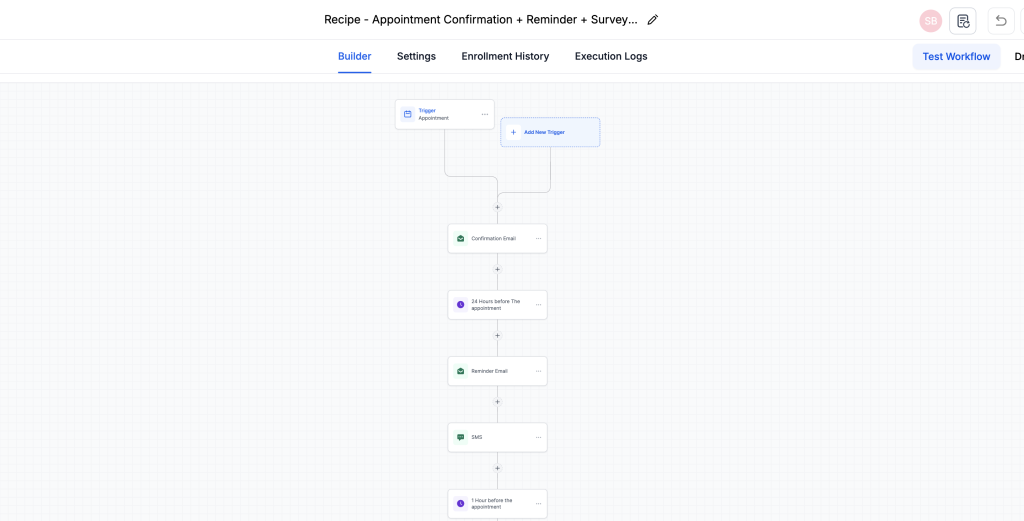
- Appointment reminders
- Missed call text backs
- Sales pipelines
This makes it particularly popular with agencies and service businesses.
One advantage is that automation workflows are visual and easy to modify. You can trigger campaigns when leads fill out forms, book appointments, or move through a pipeline.
If you’re comparing funnel platforms, see GoHighLevel vs ClickFunnels
Many businesses choose GoHighLevel because it replaces multiple tools.
Typical replacements include:
- Email marketing software
- Funnel builders
- SMS tools
- Booking software
- CRM systems
That consolidation often reduces monthly costs.
If you want to understand the real monthly cost, see GoHighLevel Hidden Costs
Best for
Service businesses, agencies, and consultants that need full automation.
2. HubSpot – Best Beginner Friendly CRM Automation
HubSpot is often recommended as a starter CRM for marketing automation because the interface is simple and the free plan is well known.
Businesses can:
Send marketing emails
Track leads
Build basic workflows
Manage pipelines
However, advanced automation quickly becomes expensive.
Most companies need paid tiers to unlock useful marketing automation features like branching workflows and advanced segmentation.
HubSpot works best for businesses that want a structured CRM but don’t need complex automation immediately.
3. ActiveCampaign – Best Email Automation CRM
ActiveCampaign is often described as an email marketing platform, but it also functions as a strong CRM for marketing automation.
It focuses heavily on email workflows and segmentation.
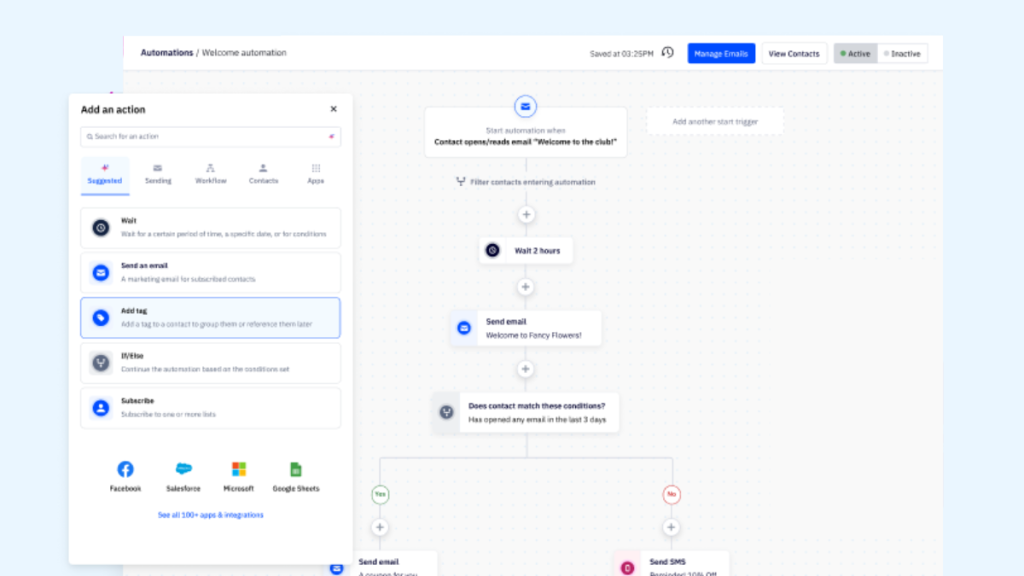
Businesses can build detailed sequences based on user behavior, tags, and events.
Automation options include:
Email sequences
Conditional logic
Lead scoring
Behavior tracking
However, ActiveCampaign lacks funnel building and appointment scheduling, which means most businesses need additional tools.
This increases total monthly cost compared with all-in-one systems.
4. ClickFunnels – Funnel Focused Marketing Automation CRM
ClickFunnels includes automation features alongside funnel building tools.
ClickFunnels includes marketing automation features, but it is not a full CRM-first automation platform like dedicated CRM systems.
It can function as a lightweight CRM for marketing automation, especially for online businesses selling digital products or courses.
ClickFunnels allows users to:
Build funnels
Collect leads
Run email sequences
Track customers
However, it is less advanced as a CRM than dedicated systems.
Pipeline management and automation flexibility are limited compared with full CRM platforms.
If you want a breakdown of costs, see ClickFunnels Pricing:
And if you’re exploring funnel design options, see ClickFunnels Templates:
Why Businesses Move to a CRM for Marketing Automation
Many small businesses start with separate tools.
Typical setup:
Email platform
Booking software
Funnel builder
Spreadsheet CRM
SMS service
Over time this becomes difficult to manage.
A single CRM for marketing automation simplifies everything.
Benefits usually include:
Less manual work.
Faster follow-up.
Better lead tracking.
Lower software costs.
Centralized customer data.
Automation is especially important for service businesses where missed leads directly reduce revenue.
How to Choose the Right CRM for Marketing Automation
The best CRM depends on how automation is used.
Businesses running lead generation campaigns usually need funnels and automation in the same system.
Service businesses typically need appointment automation and follow-ups.
Online businesses often need funnel automation.
The most important factor is whether the CRM replaces multiple tools.
Platforms that combine CRM and automation usually deliver the best long-term value.
Final Verdict
Choosing the right CRM for marketing automation depends on how much automation your business needs.
Simple systems work for basic contact management, but serious marketing automation requires a more complete platform.
For businesses that want automation, funnels, and CRM in one place, GoHighLevel is usually the most complete solution.
Beginners may prefer HubSpot for its simplicity, while email-focused businesses often prefer ActiveCampaign.
The best option is usually the platform that reduces the number of separate tools you need to manage.
Platforms like GoHighLevel combine CRM pipelines, marketing automation and funnel tools in one system, which is why many small businesses prefer them over traditional CRM platforms.
FAQ, CRM for Marketing Automation
What is a CRM for marketing automation?
A CRM for marketing automation combines customer management with automated marketing tools. This usually includes email sequences, SMS follow-ups, lead tracking, and automated campaigns triggered by customer actions.
Unlike traditional CRMs, marketing automation CRMs help businesses follow up with leads automatically instead of manually sending messages.
Do small businesses need a CRM with marketing automation?
Most small businesses benefit from a CRM with marketing automation because it reduces manual work and improves lead follow-up.
Automated reminders, email sequences, and SMS follow-ups help businesses respond faster and convert more leads without hiring additional staff.
Which CRM has the best marketing automation features?
Some of the best platforms include GoHighLevel, HubSpot, ActiveCampaign, and ClickFunnels.
All-in-one platforms usually provide the most complete automation because funnels, pipelines, and campaigns are connected in one system.
Is GoHighLevel a CRM for marketing automation?
Yes. GoHighLevel is designed specifically as a CRM for marketing automation and includes email campaigns, SMS automation, pipelines, funnels, and workflow automation in one platform.
Many businesses choose it because it replaces several separate tools.
What is the difference between a CRM and marketing automation software?
A CRM stores customer information and tracks leads.
Marketing automation software runs campaigns and follow-ups automatically.
A CRM for marketing automation combines both functions into one system.
Suggested Reads
Best CRM With Automation for Small Businesses
Best Free CRM for Small Business (2026)
GoHighLevel vs HubSpot Comparison Guide
ClickFunnels vs Kajabi Comparison Guide