
Lead Follow Up Strategy Small Business Owners Should Use
You’re getting leads, but they’re not turning into customers.
That’s where most small businesses get stuck. Not because they don’t have leads, but because they don’t have a clear lead follow up strategy small business owners can rely on to convert enquiries consistently.
You reply. You follow up once. Maybe twice.
Then nothing.
No response. No booking. No clear reason why.
That’s where most small businesses get stuck. Not because they don’t have leads, but because they don’t have a clear lead follow up strategy for small business that actually moves people toward a decision.
If your follow-up is reactive, inconsistent, or based on memory, it will always break.
Quick Summary
| Area | Insight |
|---|---|
| Core Problem | Follow-up is inconsistent and not tied to a clear outcome |
| What Doesn’t Work | Random replies, no timing, no structured sequence |
| What Works | A defined follow-up strategy with timing, channels, and triggers |
| Key Shift | Move from “checking in” to guiding toward a decision |
| Tools Role | CRM + automation ensures consistency and tracking |
| Result | More replies, more booked calls, fewer lost leads |
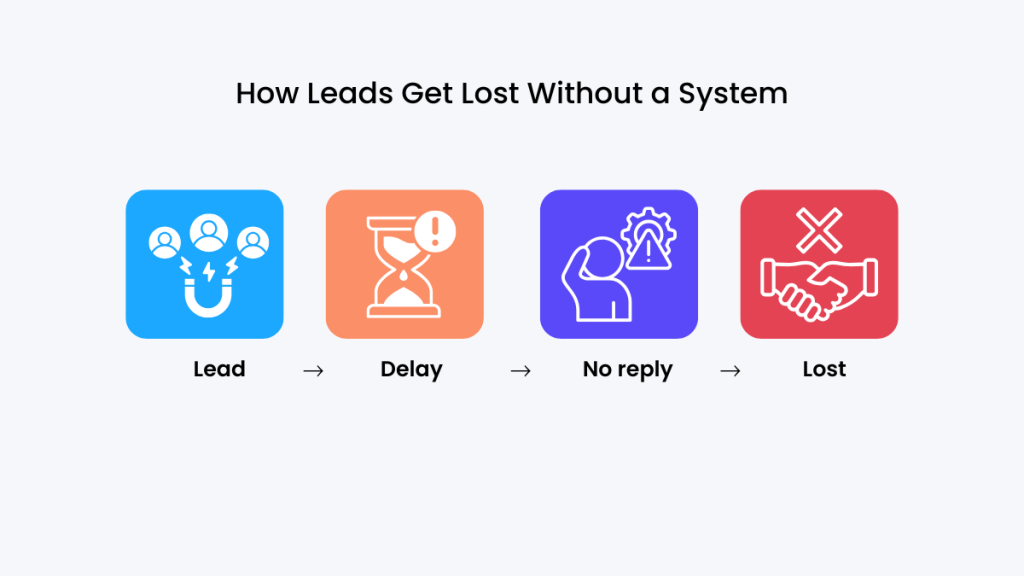
How Leads Get Lost Without a System
Early Software Overview (Top Tools)
If your follow-up feels messy, the issue isn’t effort. It’s structure.
These tools support a proper strategy:
GoHighLevel
Best for running a complete follow-up strategy with automation, pipeline tracking, and messaging in one place.
ClickFunnels
Best when your follow-up is tied directly to an offer or funnel journey.
HubSpot CRM
Best for tracking and visibility, especially if you want to understand what’s happening with your leads.
If your follow-up is spread across tools, your strategy will always fall apart.
What Most “Follow-Up Strategies” Get Wrong
Most businesses think they have a strategy.
They don’t.
They have:
- a reply
- maybe a reminder
- then silence
That’s not a strategy. That’s a delay.
A real lead follow up strategy for small business is designed to:
move the lead toward a decision
not just “stay in touch”
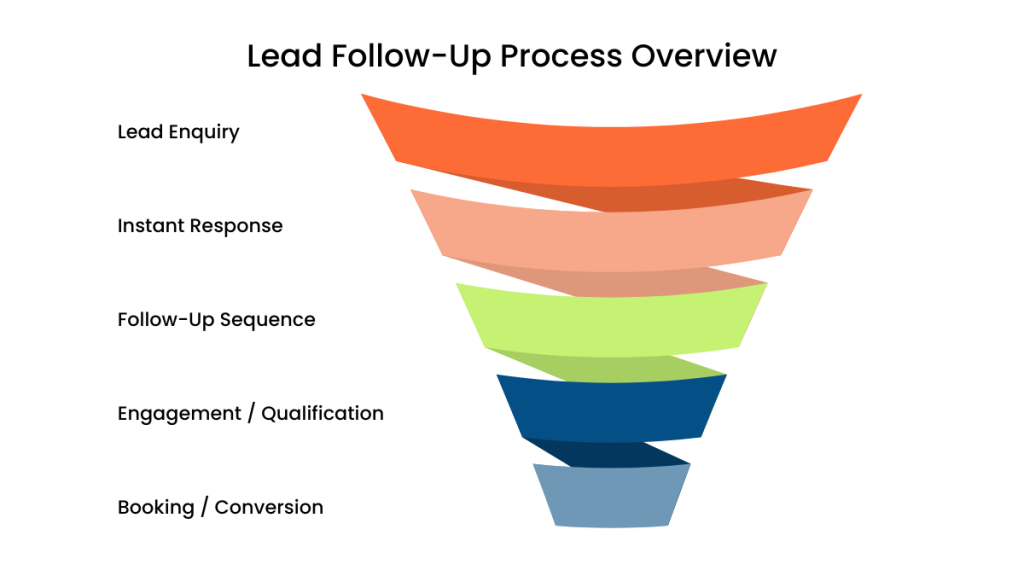
The Strategy That Actually Converts
This is where most advice gets vague.
So here’s what actually works.
Step 1: Immediate Positioning (Day 0)
Lead comes in → respond instantly
Example SMS:
“Hey, just saw your enquiry come through. We’ll be in touch shortly. If you want to book now, here’s the link.”
Purpose:
- confirm receipt
- set expectation
- offer next step
If you delay this, you lose momentum.
Step 2: Clarify Intent (Day 1)
Email:
Subject: “Quick question about your enquiry”
Message:
“Just checking what you’re looking to achieve so we can point you in the right direction.”
Purpose:
- qualify the lead
- start a conversation
This is where most businesses skip and lose control.
Step 3: Reinforce Value (Day 2–3)
Now you follow up with:
- reassurance
- context
- outcomes
Not:
“just checking in”
Instead:
give them a reason to reply
Step 4: Create a Decision Point (Day 4–5)
Final follow-up:
- clear call to action
- booking link
- deadline or prompt
If your follow-up never pushes toward a decision, it never converts.
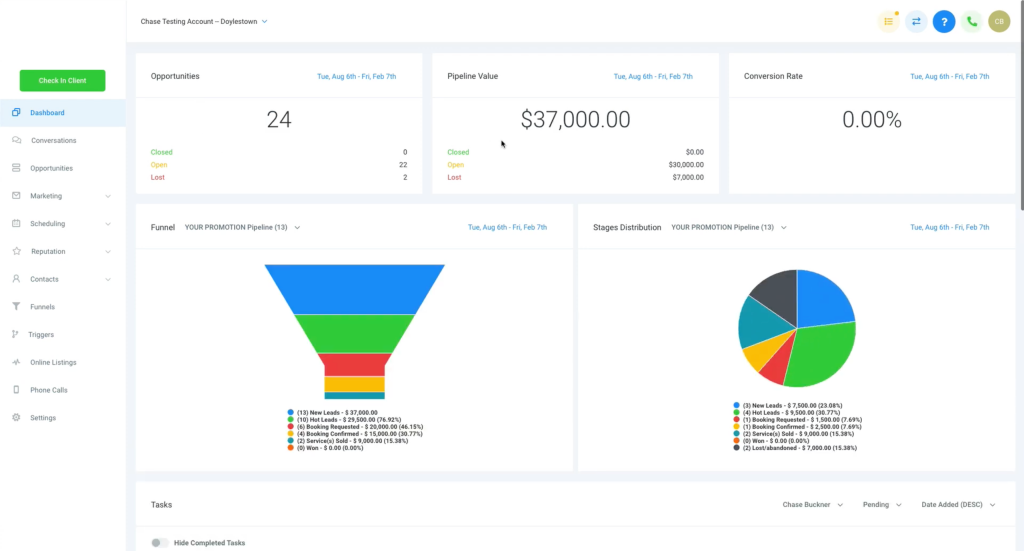
Step 5: Track Everything in a Pipeline
Leads should move through:
- New
- Contacted
- Engaged
- Booked
- Closed
Each stage triggers the next step.
This is what turns strategy into a system.
Why Your Current Approach Isn’t Working
Be honest.
Your follow-up probably:
- depends on when you remember
- isn’t timed
- isn’t tracked
- doesn’t guide toward a decision
That’s why leads disappear.
This is exactly what’s broken in most setups explained in Why Businesses Lose Leads.
Real-World Example
A small service business runs ads.
Here’s the difference between no strategy vs strategy:
Without strategy:
- lead comes in
- reply later
- no follow-up
- lead gone
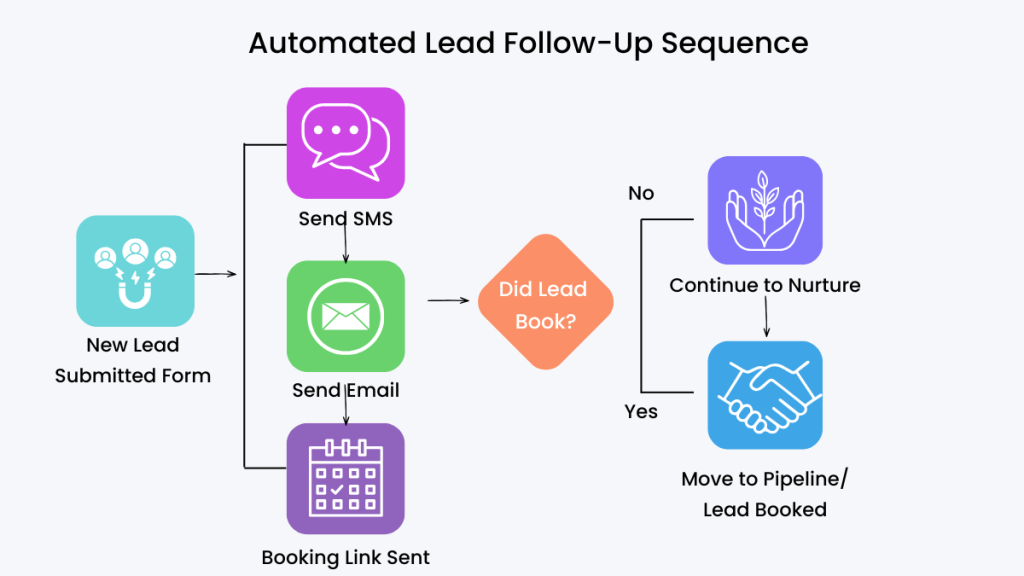
With strategy:
- instant SMS
- structured email sequence
- pipeline tracking
- booking link sent
- follow-up continues until decision
Lead → CRM → automation → pipeline → conversion
No gaps. No guessing.
This is what your follow-up should look like when it runs automatically
Software Comparison Table
| Platform | Best For | Automation Features | Pricing |
|---|---|---|---|
| GoHighLevel | Full follow-up strategy | CRM, SMS, workflows, pipeline | From $97/mo |
| ClickFunnels | Funnel follow-up | Funnel triggers, email automation | From $147/mo |
| HubSpot | Lead tracking | Email automation, reporting | Free + paid |
Choosing the Right Strategy Setup
Use GoHighLevel if you want:
- everything connected
- automated follow-up
- minimal manual work
Use ClickFunnels if you want:
- follow-up tied to funnels
- offer-driven conversion
Use HubSpot if you want:
- visibility and tracking
- structured CRM setup
If your follow-up is inconsistent, the issue isn’t effort. It’s strategy.
Why Most Businesses Never Improve This
They think:
“we just need better leads”
But better leads won’t fix:
- slow response
- poor follow-up
- no structure
More leads just means more missed opportunities.
To fix the foundation, see How to Organise Leads for Small Business.
Software Reinforcement, What You Should Use
At this point, the pattern is clear.
If you want a complete lead follow up strategy for small business that runs consistently, GoHighLevel is the strongest option because everything is connected.
ClickFunnels works if your strategy is funnel-based.
HubSpot works if your priority is tracking and reporting.
But without a strategy, tools won’t fix the problem.
FAQ
What is a lead follow-up strategy?
It’s a structured process that guides leads from enquiry to decision using timed communication and tracking.
How many follow-ups should I send?
Typically 5–7 over several days, depending on your offer and audience.
What’s the biggest mistake in follow-up?
Being inconsistent and not guiding the lead toward a decision.
Do I need automation for this?
Yes. Without automation, consistency breaks down quickly.
Suggested Reads
To understand the problem, read Why Businesses Lose Leads.
To build the system, see How to Organise Leads for Small Business.
To compare tools, explore GoHighLevel vs ClickFunnels.