
Most businesses don’t lose leads because of bad marketing.
They lose them because of slow lead response time.
Someone fills out a form, sends a message, or calls your business. In that moment, they’re actively looking for a solution.
And then nothing happens.
No reply. No follow-up. No system.
By the time you respond, they’ve already moved on.
Want to fix this without chasing leads manually?
Start with a system that responds instantly and tracks every enquiry → automated CRM setup
Quick Summary
✔ Lead response time has a direct impact on conversions, not just engagement
✔ Most leads lose interest within minutes if no response is received
✔ Manual follow-up breaks down as lead volume increases
✔ Automation removes delays and ensures every lead is handled immediately
Why Lead Response Time Is Critical
Lead response time isn’t just about being polite or responsive.
It’s about timing.
When someone reaches out, they’re in a decision window. They’re comparing options, looking for answers, and ready to act.
If you respond quickly, you stay in that window.
If you delay, you fall out of it.
And once that happens, the lead doesn’t just wait.
They move on.
The Real Insight Most Businesses Miss
Lead response time isn’t a speed problem.
It’s a system problem.
Most businesses think they just need to “reply faster.”
But speed isn’t something you fix manually. It’s something you build into your process.
That’s why some businesses respond instantly every time, while others are always late, even when they try to improve.
The difference isn’t effort.
It’s whether a system exists to handle leads the moment they come in.
What Actually Happens When You Delay
Leads don’t sit and wait for your reply.
They keep searching, contact other businesses, and lose urgency quickly.
By the time you respond, the decision has already been made.
This is why businesses often believe they need more leads, when the real issue is that they’re not handling the ones they already have.
Lead Response Time Statistics (What the Data Shows)
The data around lead response time is consistent across industries.
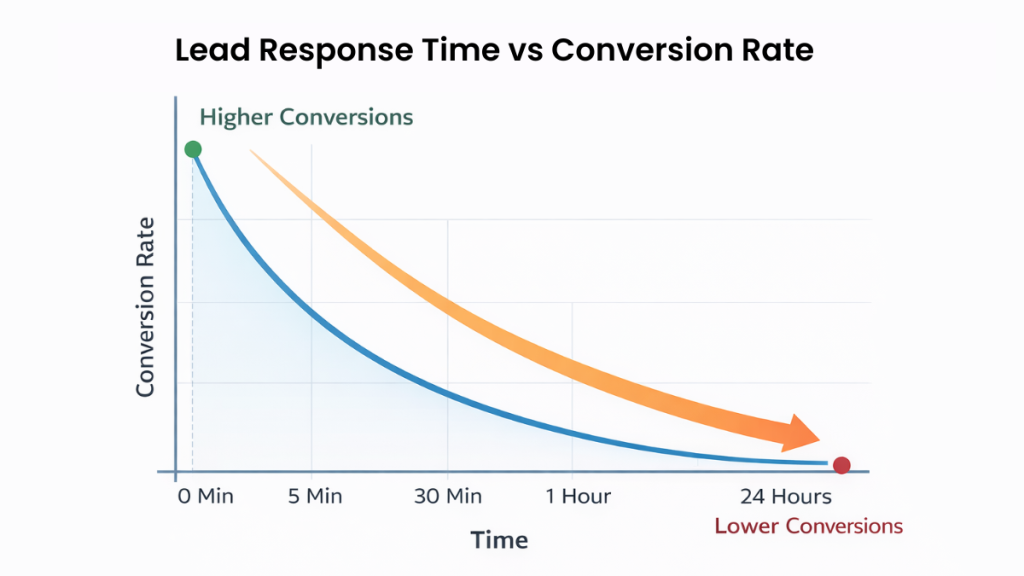
Responding within 5 minutes can significantly increase your chances of converting a lead.
Wait 30 minutes to an hour, and those chances drop sharply.
After a few hours, most leads have already moved on or lost interest completely.
This is why the best response time for leads isn’t “same day.”
It’s as close to instant as possible.
Because at that moment, the lead is actively looking, comparing, and ready to act.
What a Good Lead Response Time Looks Like
• under 5 minutes → strong chance of conversion
• 5–30 minutes → still viable
• 1–2 hours → declining fast
• same day → weak
• next day → almost lost
Why Most Businesses Fail at Lead Follow Up Time
This isn’t about effort or discipline.
It’s about structure.
Most businesses rely on inboxes, memory, or manual reminders. That might work when lead volume is low, but it breaks as soon as things grow.
Leads get missed. Follow-ups are delayed. Visibility disappears.
This is exactly why having a clear system matters. Without it, response time becomes inconsistent, no matter how hard you try.
The Real Problem: No System
Lead response time isn’t something you “improve.”
It’s something you design.
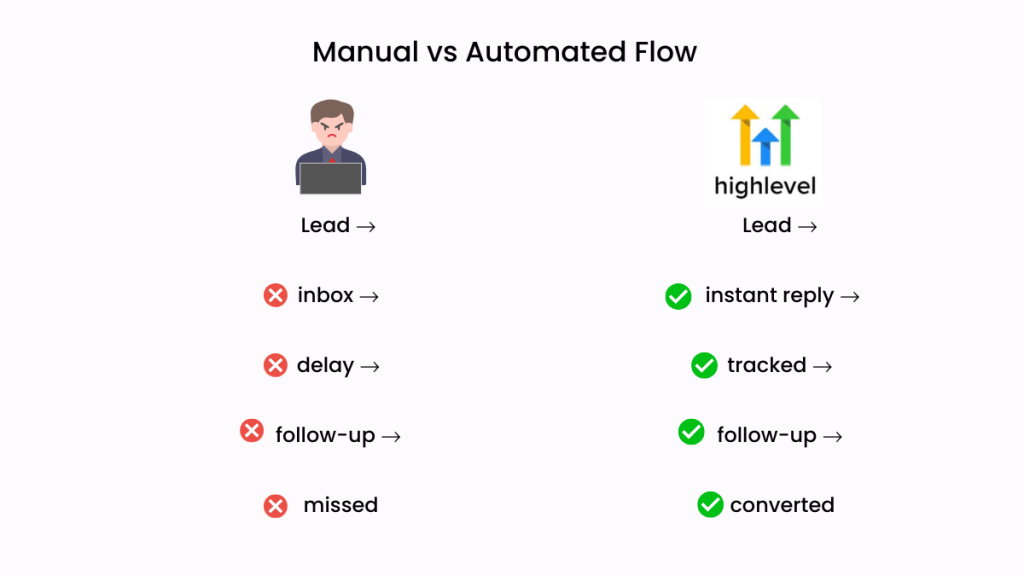
If your process depends on checking emails, replying when you can, and remembering to follow up later, your response time will always be inconsistent.
That inconsistency is what causes lost opportunities.
The Solution: Automate the First Response
The fastest way to fix lead response time is to remove manual dependency.
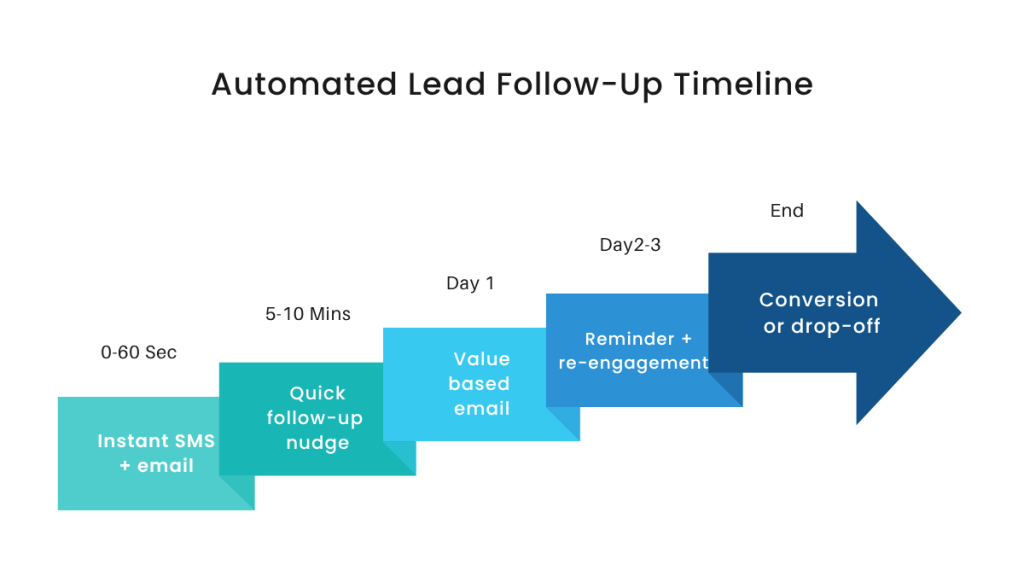
Automation ensures every lead gets an immediate response, even when you’re not available.
✔ instantly replies to new enquiries
✔ confirms the lead has been received
✔ keeps the conversation active
✔ buys you time to follow up properly
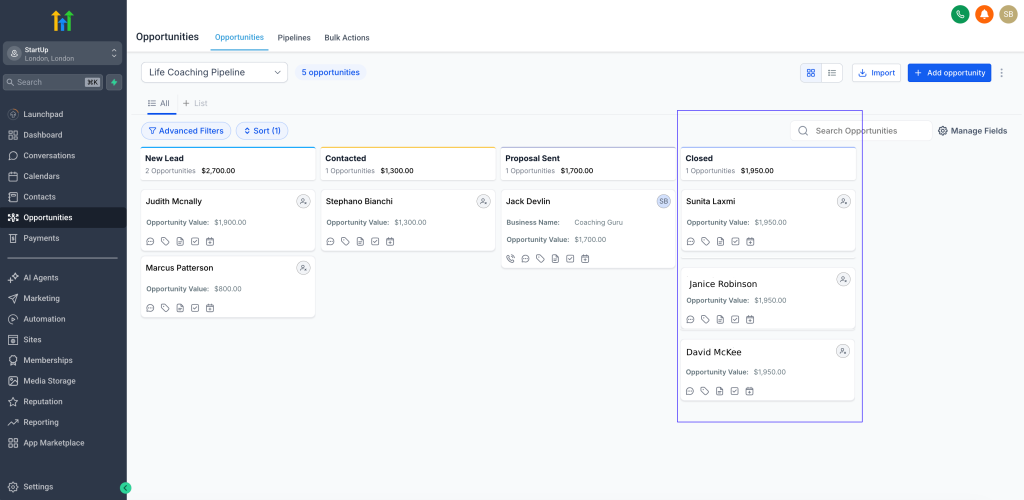
This is where systems like CRM pipeline management become essential. They don’t just track leads, they control what happens next.
Manual vs Automated Response Time
Tool | Response Speed | Reliability
Manual follow-up | Delayed | Inconsistent
Email inbox | Slow | Easy to miss
CRM with automation | Instant | Consistent
All-in-one systems | Immediate | Fully controlled
Decision: What Should You Use?
This depends on your current stage.
If you only receive a few leads per week, manual follow-up is still manageable. A simple setup is enough, and automation isn’t essential yet.
As lead volume increases, visibility becomes more important. This is where a CRM makes sense, giving you structure and a clear view of every lead.
If you want consistent conversions, automation becomes necessary. Instant replies and structured follow-up remove delays completely.
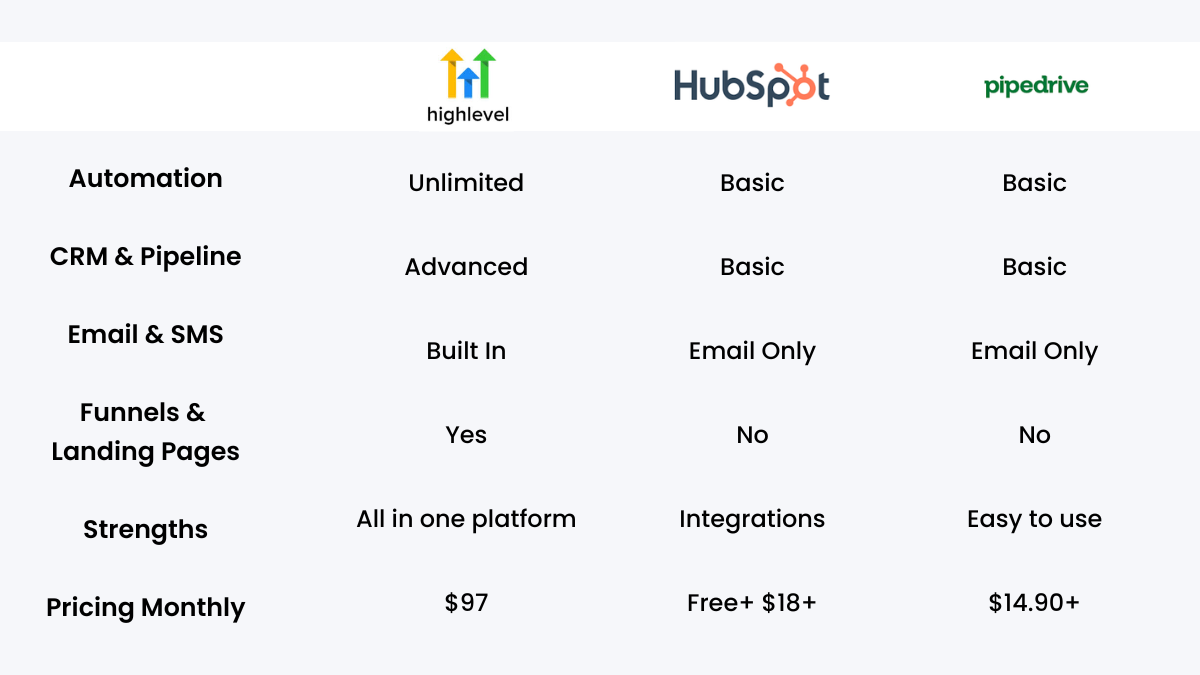
And if you’re handling leads across multiple channels, an all-in-one system becomes the better option. It keeps everything in one place and ensures nothing gets missed.
The mistake most businesses make is choosing tools based on features instead of fit.
The right choice is the one that matches your stage without overcomplicating your process.
Downsides You Should Know
Automation isn’t perfect.
✔ There’s a learning curve
If you’ve only used simple tools, setting up workflows may take time.
✔ It can feel like overkill
If you only get a small number of leads, a full system may not be necessary.
✔ Setup requires effort
You need to build and test your system properly for it to work well.
But once it’s in place, it removes manual work entirely and ensures consistency.
Bringing It All Together
Lead response time is not about reacting faster.
It’s about removing delays completely.
Manual systems rely on you, which makes them inconsistent.
Automated systems remove that dependency and ensure every lead is handled the same way, every time.
If you want to fix this properly, start with a system that responds instantly and shows you exactly what’s happening with
every lead → set up automated follow-up
FAQ
What is the best lead response time?
The best lead response time is within 5 minutes or less. Faster responses significantly improve conversion rates.
How fast should you respond to leads?
Ideally immediately. The longer you wait, the lower your chances of converting that lead.
Why is lead response time important?
Because leads are most engaged when they first reach out. Delays reduce urgency and interest.
Can automation improve response time?
Yes. Automation ensures every lead receives an instant response without relying on manual action.
Suggested Reads
- Lead management software
- CRM with automation
- Automatic lead follow-up system
- Missed call text back system
- CRM pipeline management guide
Final Verdict
Most businesses don’t have a lead problem.
They have a response problem.
And more specifically, they have a system problem.
If your lead response time is slow, inconsistent, or manual, you’re not just delaying replies.
You’re losing revenue.
Because leads don’t wait.
They move on to whoever responds first.
The businesses that win aren’t the ones generating the most leads.
They’re the ones that respond instantly and consistently, every time.
If you don’t have a system that does that, you’re guessing instead of managing.