
GoHighLevel SaaS Mode allows agencies to turn their CRM platform into a recurring subscription product for clients.
They build funnels, set up automation and generate leads for clients. But revenue is still limited by how many accounts they can personally manage.
At some point the traditional agency model becomes difficult to scale. More clients usually means more support, more onboarding and more time managing accounts.
That’s why many agencies start looking for a way to turn their systems into recurring revenue instead of relying only on service retainers.
This is exactly where GoHighLevel SaaS Mode becomes interesting.
Instead of just using the platform internally, agencies can package their CRM, funnels and automation into a product clients pay for every month.
In other words, SaaS Mode allows agencies to move from a service-only model to a software-style recurring revenue model.
Quick Summary
• GoHighLevel SaaS mode allows agencies to resell the platform as their own CRM.
• Agencies can create client accounts and charge monthly subscriptions.
• SaaS mode is typically used with the Agency Unlimited plan.
• The system can include CRM, funnels, automation, SMS marketing, and appointment booking.
• Many agencies build recurring revenue by selling CRM access to local businesses.
Try GoHighLevel SaaS Mode Yourself
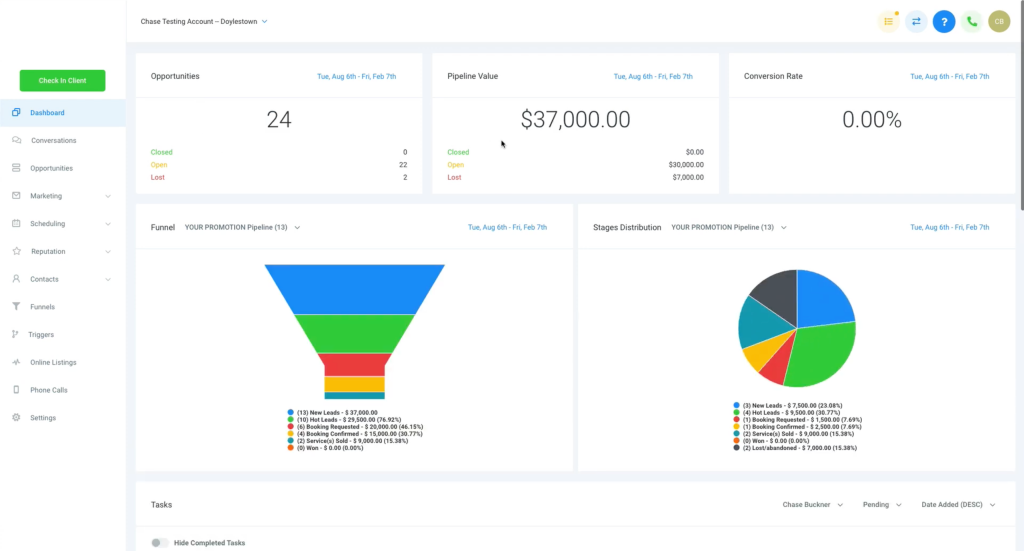
If you want to test the platform and explore the agency dashboard, you can start with the free trial and see how SaaS mode works in practice.
What GoHighLevel SaaS Mode Actually Means
SaaS stands for Software as a Service.
Instead of selling one-time services, businesses charge a monthly subscription for software access.
With GoHighLevel SaaS mode, agencies can create a CRM platform for clients that includes:
lead management pipelines
marketing automation
SMS follow-up systems
landing page funnels
appointment booking tools
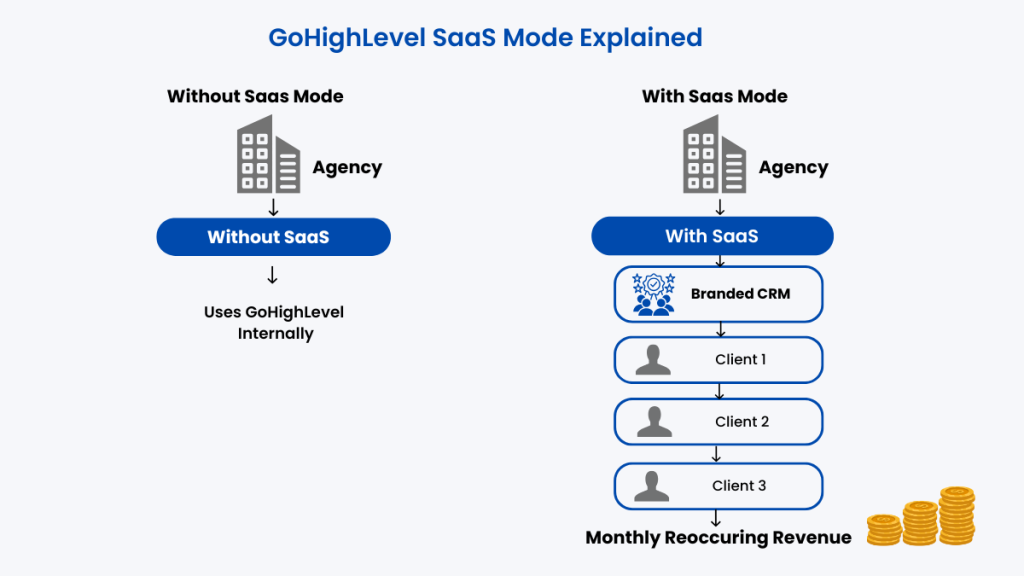
Clients log into the system through a white-label dashboard, which can be branded with the agency’s logo and domain.
To the client, it appears like the agency has created their own CRM platform.
Many agencies first learn about the platform while researching tools like best CRM with automation for small businesses because both topics relate to CRM automation and lead management systems.
Why Agencies Use GoHighLevel SaaS Mode
Most agencies originally use GoHighLevel to manage marketing campaigns.
But SaaS mode allows them to turn the platform into a recurring revenue system.
Instead of charging only for services like:
website builds
lead generation campaigns
advertising management
agencies can charge monthly subscriptions for CRM access.
A simple example:
Client 1 – $297/month CRM access
Client 2 – $297/month CRM access
Client 5 – $1485/month total revenue
Once multiple clients are using the system, the $497 Agency plan becomes a small operating cost compared with the recurring income.
If you want a detailed breakdown of what the plan includes, see the GoHighLevel $497 Plan Review (Agency Unlimited).
How GoHighLevel SaaS Mode Works
GoHighLevel SaaS Mode vs Traditional CRM Platforms
| Platform | Best For | Automation | Pricing |
|---|---|---|---|
| GoHighLevel | Agencies and client management | Full marketing automation | From ~$97/month |
| HubSpot | Large businesses and enterprise CRM | Advanced automation | Higher enterprise pricing |
| ClickFunnels | Funnel marketing | Funnel-based automation | From ~$97/month |
| Zoho CRM | Small business CRM | Moderate automation | Lower pricing tiers |
The key difference is that GoHighLevel allows agencies to create multiple client accounts and sell the system itself, rather than just using it internally.
Upgrade to the Agency Unlimited Plan
If you’re already using GoHighLevel and want to run SaaS mode or manage multiple client accounts, you’ll likely need the Agency Unlimited ($497) plan.
This plan allows you to:
• create unlimited client sub-accounts
• run SaaS mode and white-label CRM
• manage multiple businesses from one dashboard
If you’re planning to run SaaS mode, you’ll likely need the Agency Unlimited plan, which allows unlimited client accounts and white-label CRM features.
How Agencies Price GoHighLevel SaaS Accounts
Agencies often package CRM access as part of a service bundle.
Typical pricing models include:
Basic CRM access – $97/month
CRM + automation setup – $197/month
Full CRM + lead generation system – $297–$497/month
This pricing works because local businesses value tools that help them capture leads and follow up automatically.
For example, a dental clinic or home services company might use the CRM to manage enquiries, book appointments, and send automated reminders.
When agencies scale SaaS systems, they also consider messaging and communication costs. A full breakdown of these additional platform costs is explained in the GoHighLevel Hidden Costs guide.
Who GoHighLevel SaaS Mode Is Best For
GoHighLevel SaaS Mode works best for agencies that manage marketing systems for multiple clients and want to generate recurring revenue from those systems.
Agencies running lead generation campaigns, funnels, or CRM automation often use SaaS Mode to provide clients with their own branded dashboard.
Businesses offering marketing automation services or CRM management also use SaaS Mode to charge a monthly subscription for access to the platform.
For agencies managing several client accounts, SaaS Mode turns a marketing service into a scalable software-style business model.
When GoHighLevel SaaS Mode Makes Sense
GoHighLevel SaaS mode works best for people who manage marketing systems for multiple businesses.
Examples include:
marketing agencies
automation consultants
lead generation specialists
CRM implementation experts
For these businesses, SaaS mode allows them to move beyond one-time projects and create recurring software revenue.
Understanding how SaaS mode works also helps explain why many agencies eventually upgrade after reading the GoHighLevel Pricing Explained (UK & US) breakdown.
Conclusion
GoHighLevel SaaS Mode allows agencies to turn their CRM platform into a recurring revenue product instead of simply using the software internally. By giving clients access to a branded dashboard, agencies can provide CRM systems, automation tools, funnels, and lead management under their own brand.
For agencies managing multiple clients, GoHighLevel SaaS Mode makes it possible to create predictable monthly revenue while simplifying client account management from a single platform.
Instead of relying only on service retainers, many agencies use SaaS Mode to package CRM access as a subscription, creating a scalable software-style business model.
For agencies managing multiple clients, GoHighLevel SaaS Mode provides a scalable way to turn CRM systems into recurring revenue.
FAQ
What is GoHighLevel SaaS mode?
GoHighLevel SaaS mode allows agencies to resell the CRM platform to clients under their own brand. Agencies can create client accounts and charge a monthly subscription.
Do you need the $497 plan for SaaS mode?
Most agencies use the Agency Unlimited plan because it allows unlimited client accounts and full agency features.
Can you white-label GoHighLevel?
Yes. Agencies can add their own branding, domain, and logo so the platform appears as their own CRM software.
How much can agencies charge for GoHighLevel SaaS?
Many agencies charge between $97 and $497 per month depending on the features included in their CRM package.
Related GoHighLevel Guides
If you’re researching the agency plan required for SaaS Mode, our guide to GoHighLevel $497 Plan Review explains what the Agency Unlimited plan includes and why it’s required for managing multiple client accounts.
Many agencies also compare pricing before enabling SaaS Mode. Our article on GoHighLevel Pricing Explained breaks down the different plans and what features each tier includes.
If you’re evaluating the full cost of running client CRM systems, the guide to GoHighLevel Hidden Costs explains additional expenses such as SMS usage, phone numbers, and automation features.
Businesses exploring CRM automation platforms may also find our guide to best CRM with automation for small businesses helpful for understanding how CRM pipelines and automation workflows work together.