
Some platforms charge per user. Others charge per account. And many add extra costs for things like email marketing, SMS messages, or integrations.
That’s why two CRM systems that look similar can end up costing very different amounts each month.
In simple terms, CRM software pricing is how platforms structure their costs, including base plans, user limits, and additional features. Understanding these models helps you avoid unexpected expenses and choose a system that fits how your business actually operates.
Many businesses comparing CRM costs eventually look at automation-focused platforms as well, especially when evaluating tools covered in our guide to best CRM software for small business.
Platforms like GoHighLevel combine CRM pipelines, automation, and marketing tools into a single system, which can change how pricing works compared to traditional CRMs.
Quick Summary
| Topic | Key Takeaway |
|---|---|
| Typical CRM cost | $30–$150/month for most small businesses |
| Entry-level CRM | Free plans available (HubSpot, Zoho) |
| Automation platforms | $97–$300/month for advanced features |
| Hidden costs | SMS, email usage, integrations, add-ons |
| Best value option | All-in-one platforms reduce total tool costs |
How CRM Software Pricing Works
Most CRM systems use subscription pricing rather than one-time purchases. That means businesses pay monthly or annually depending on the plan they choose.
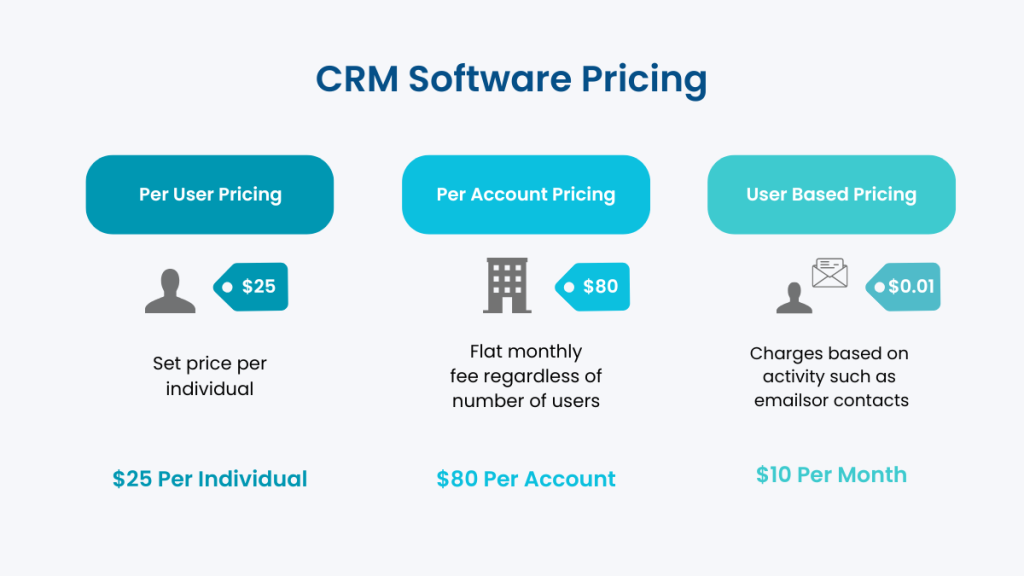
The most common pricing models include:
Per-user pricing
This model charges for each team member using the CRM. Tools like HubSpot and Pipedrive commonly use this structure.
Per-account pricing
Some platforms charge a flat monthly fee regardless of how many users the business has.
Usage-based pricing
Other CRMs charge based on how many contacts, messages, or emails the system processes.
Because automation tools often include multiple systems in one platform, businesses comparing options frequently look at automation-focused systems explained in our guide to CRM workflow automation for automated lead follow-ups.
Most CRM platforms structure pricing in one of three ways
Typical CRM Software Pricing Ranges
CRM software pricing varies widely depending on the type of business and required features.
Small businesses usually start with entry-level plans that cost between $10 and $50 per user each month. These plans typically include contact management, pipeline tracking, and basic reporting.
More advanced plans introduce automation tools, marketing integrations, and lead nurturing workflows. These systems usually range from $50 to $150 per month.
Enterprise systems with full marketing automation, advanced reporting, and API integrations can exceed $300 per month depending on team size.
According to research published by HubSpot, many businesses underestimate the true cost of CRM software because they focus only on the base subscription rather than additional tools and integrations.
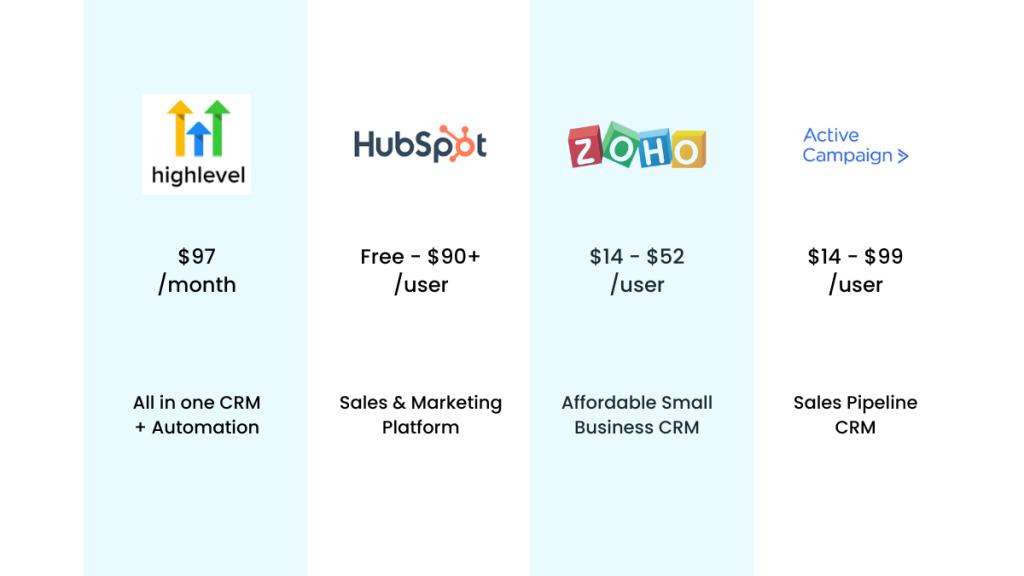
CRM Software Pricing Comparison
| Platform | Best For | Automation | Pricing |
|---|---|---|---|
| GoHighLevel | All-in-one CRM and automation | Advanced workflows | From $97/month |
| HubSpot CRM | Enterprise marketing and sales teams | Strong automation | Free plan, paid upgrades |
| ActiveCampaign | Email and marketing automation | Advanced workflows | From $39/month |
| Zoho CRM | Small businesses | Moderate automation | From $14/month |
| Pipedrive | Sales pipeline management | Basic automation | From $14.90/month |
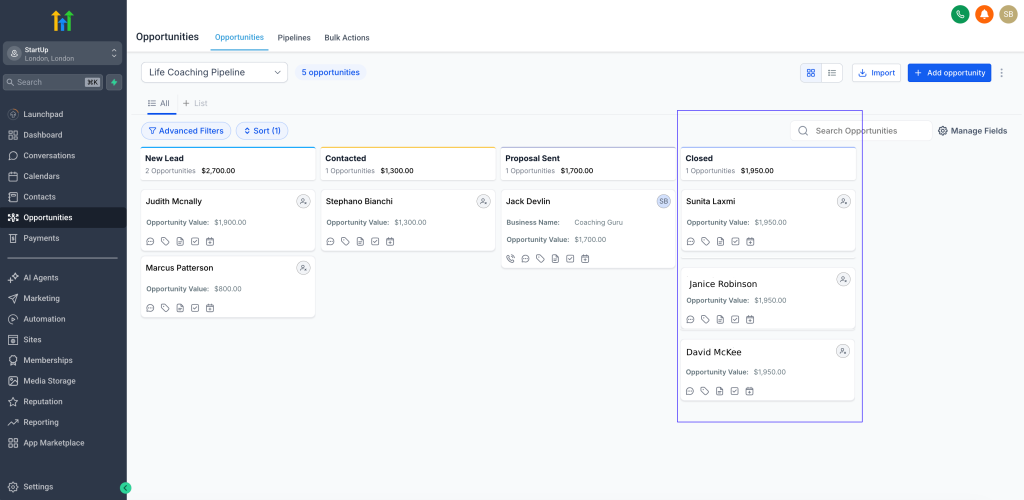
What Affects CRM Software Pricing
Several factors influence CRM software pricing beyond the base monthly subscription.
Number of Users
Many CRM platforms charge per user, which means team growth can significantly increase monthly costs.
A CRM priced at $25 per user may seem affordable initially, but a 10-person team would pay $250 each month.
Automation Features
Automation tools are often included only in higher-tier plans. Businesses wanting email sequences, pipeline triggers, or automated lead nurturing typically need upgraded plans.
Automation features are often central to systems discussed in our guide to Best CRM for Marketing Automation.
Contact Database Size
Some CRM platforms limit how many contacts businesses can store before pricing increases.
Companies with large email lists or lead databases often pay higher monthly costs.
Integrations and Add-Ons
Many CRM platforms charge extra for integrations with email marketing tools, payment systems, or third-party apps.
These costs are often overlooked but can significantly increase the total monthly spend.
Businesses that want CRM pipelines, automation workflows, email marketing, and SMS messaging in one place often compare systems like GoHighLevel to reduce software stack complexity.
Hidden Costs of CRM Software
CRM software pricing can sometimes appear lower than the true total cost.
Hidden costs often include:
Email marketing tools
SMS messaging credits
Integration platforms
Reporting upgrades
Advanced automation features
For example, many businesses evaluating CRM automation systems also look closely at messaging costs and automation fees, which we explain in our breakdown of GoHighLevel pricing and hidden costs.
Understanding these hidden costs helps businesses choose tools that remain affordable as they scale.
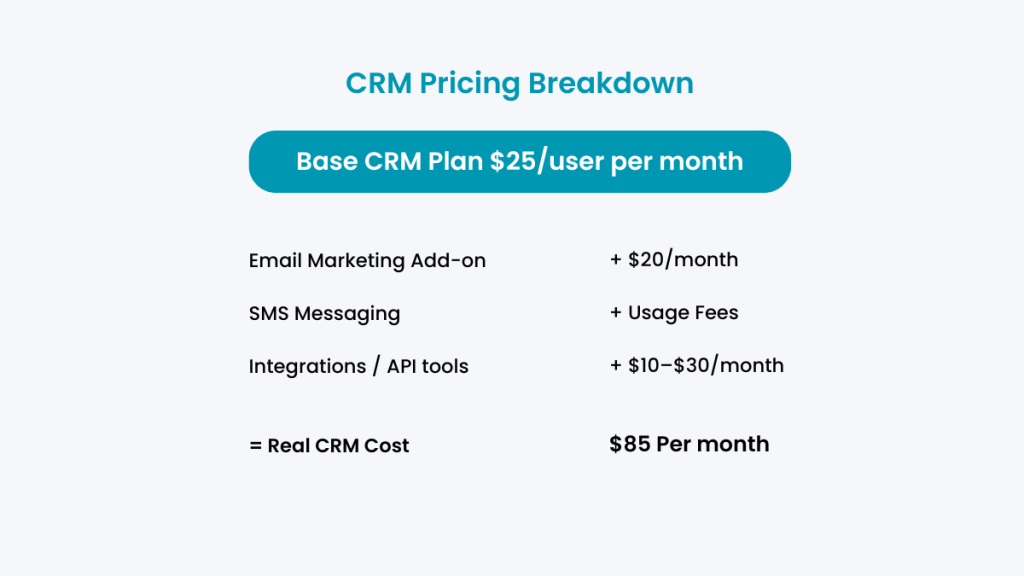
Real Example, What a Small Business Actually Pays
A typical small business might start with a basic CRM plan at around $25 per month.
As the business grows, additional costs are added:
- email marketing add-ons
- SMS messaging charges
- automation features
- integrations with other tools
This can quickly increase the total cost to $80–$150 per month.
For businesses using multiple tools, the total cost can be even higher.
This is why many businesses move to all-in-one platforms that combine CRM, automation, and marketing tools in a single system.
When Higher CRM Pricing Makes Sense
A higher monthly price does not always mean worse value.
Businesses that generate leads online, run sales teams, or rely on automated follow-ups often benefit from more advanced CRM platforms.
Systems that combine CRM pipelines, marketing automation, and lead capture tools can replace several separate services.
That is why many growing businesses compare CRM tools alongside funnel platforms like those discussed in our article comparing GoHighLevel vs ClickFunnels.
Conclusion
CRM software pricing depends heavily on how the platform structures its subscription model. Some systems charge per user, others charge per account, and many include additional automation features that increase monthly costs.
Businesses evaluating CRM tools should look beyond the base subscription price and consider the total system cost, including messaging, automation, integrations, and marketing features.
Understanding how CRM pricing works makes it easier to choose platforms that scale with the business rather than becoming expensive as teams grow.
FAQ
How much does CRM software usually cost?
CRM software pricing typically ranges from $10 to $150 per user per month depending on features, automation tools, and integrations. Enterprise platforms can cost significantly more.
What is the cheapest CRM software?
Several CRM platforms offer entry-level plans under $20 per month, but these plans usually include limited automation and fewer integrations.
Why does CRM software pricing vary so much?
Pricing varies because CRM platforms include different features such as automation workflows, email marketing, analytics, and integrations.
Do small businesses need expensive CRM software?
Not necessarily. Many small businesses start with affordable CRM tools and upgrade as their lead volume and sales processes grow.
Suggested Reads
If you’re comparing CRM tools for smaller teams, our guide to Best CRM Software for Small Business explains how pipelines and automation systems work in real business setups.
Businesses interested in automating their follow-up processes should also read our article on CRM workflow automation for automated lead follow-ups, which explains how automation improves lead response speed.
For deeper comparisons between funnel and CRM systems, our breakdown of GoHighLevel vs ClickFunnels explores how these platforms differ for lead generation and marketing automation.
If you’re researching automation-focused CRMs, our guide to Best CRM for Marketing Automation explains which systems offer the strongest automation features.