
Best CRM for Marketing Agencies Platform Comparison
The best CRM for marketing agencies helps teams track leads, manage pipelines, automate follow-ups, and monitor campaigns across multiple clients.
Modern agencies need more than a simple contact database. They need systems that connect lead tracking, pipeline management, automation, and campaign reporting in one place.
Choosing the right CRM becomes critical once agencies begin managing leads from multiple campaigns and multiple clients.
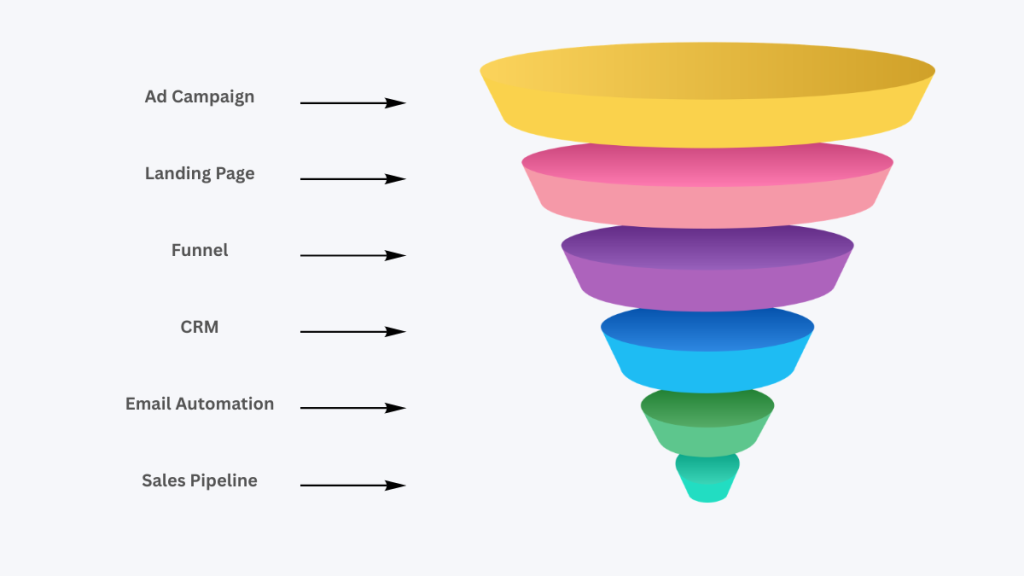
In the early stages, agencies often rely on a collection of tools stitched together just to make things work. A spreadsheet for leads, an email platform for follow-ups, a funnel builder for landing pages, and a separate CRM for tracking deals.
At first, that setup feels manageable.
But once an agency begins running several campaigns at the same time, the cracks start to appear.
Leads arrive from Facebook ads, landing pages, and website forms, but they aren’t always followed up quickly. Sales pipelines become harder to track across different campaigns, and reporting often requires pulling information from multiple systems just to show clients what’s happening.
That’s usually the moment agencies begin searching for a CRM designed specifically for marketing agencies, rather than relying on generic platforms built for traditional sales teams.
If you’re still exploring the fundamentals of CRM platforms, our guide to CRM software for small businesses explains how different systems handle pipelines, automation, and lead tracking.
Why Agencies Need More Than a Basic CRM
Traditional CRM systems were designed for companies selling their own products or services.
Agencies operate very differently.
Instead of managing one pipeline, they often manage several. Each client campaign can generate its own stream of enquiries, and every lead needs to be tracked, contacted, and moved through the sales process.
That’s why lead tracking becomes one of the most important functions of an agency CRM.
Lead tracking simply means monitoring where enquiries come from and what happens after they arrive. A good CRM shows whether a lead came from a landing page, an advertising campaign, or a website form, while also recording every follow-up interaction.
If you want to see how this works in more detail, our guide to CRM systems for lead generation businesses explains how agencies use pipelines to track enquiries from first contact to final conversion.
Without clear lead tracking, agencies often struggle to answer the one question clients ask most often:
“Where are our leads coming from?”
Why Most Agency Tech Stacks Eventually Break
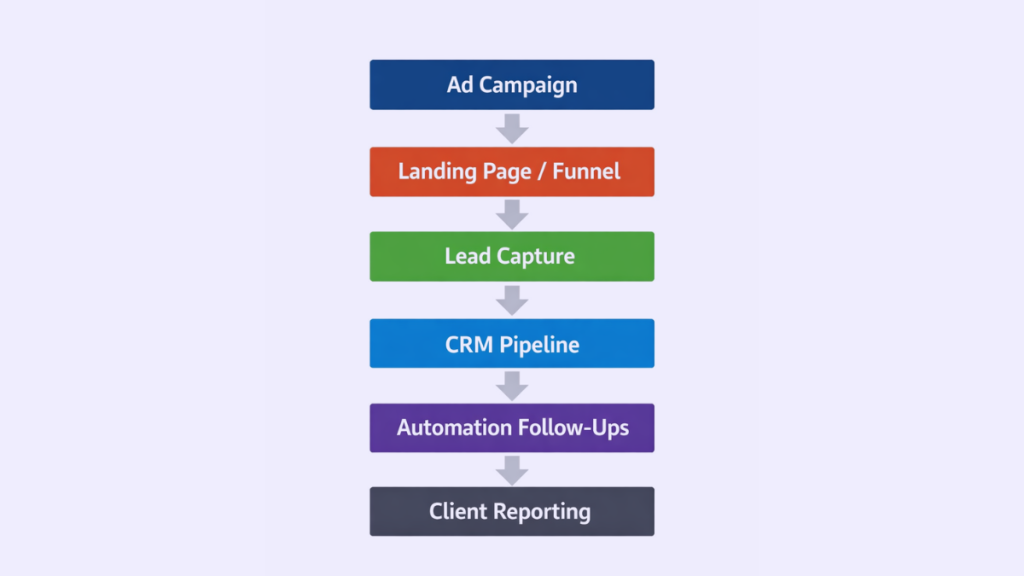
Most agencies don’t start with a CRM problem. They start with a tool stack problem.
As an agency grows, more tools are added to manage different tasks. Funnel builders for landing pages. Email platforms for follow-ups. Scheduling tools for bookings. Reporting dashboards for client results.
Each tool solves one small part of the workflow.
But together they create a complicated system where data moves between platforms through integrations, manual updates, and disconnected processes.
This is why many agencies eventually start searching for the best CRM for marketing agencies instead of relying on basic contact databases.
Over time the same issues appear again and again.
Leads coming from landing pages aren’t followed up quickly enough.
Sales pipelines become difficult to track across multiple campaigns.
Reporting requires pulling data from several tools just to understand what’s happening.
That’s why many agencies eventually move toward platforms that combine CRM features with marketing automation and campaign tracking in one system.
If you’re comparing different marketing systems more broadly, our guide to marketing automation tools for businesses explains how automation platforms help agencies manage follow-ups and nurture leads automatically.
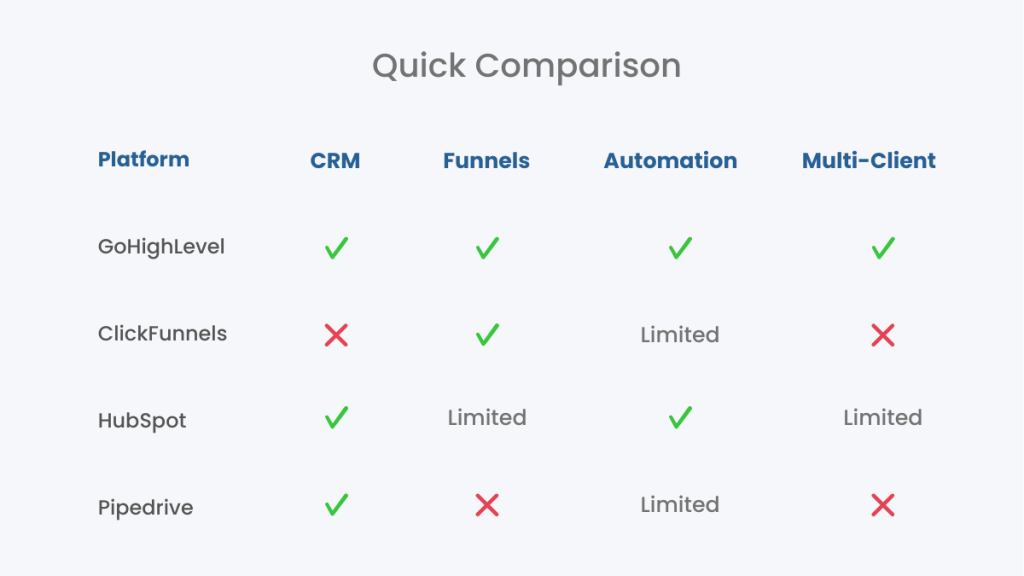
Best CRM for Marketing Agencies, Quick Comparison
| Platform | Category | Best For |
|---|---|---|
| GoHighLevel | CRM + automation platform | Agencies managing multiple clients |
| ClickFunnels | Funnel builder | Lead generation campaigns |
| HubSpot | Marketing CRM | Larger marketing teams |
| Pipedrive | Sales CRM | Simple pipeline tracking |
GoHighLevel
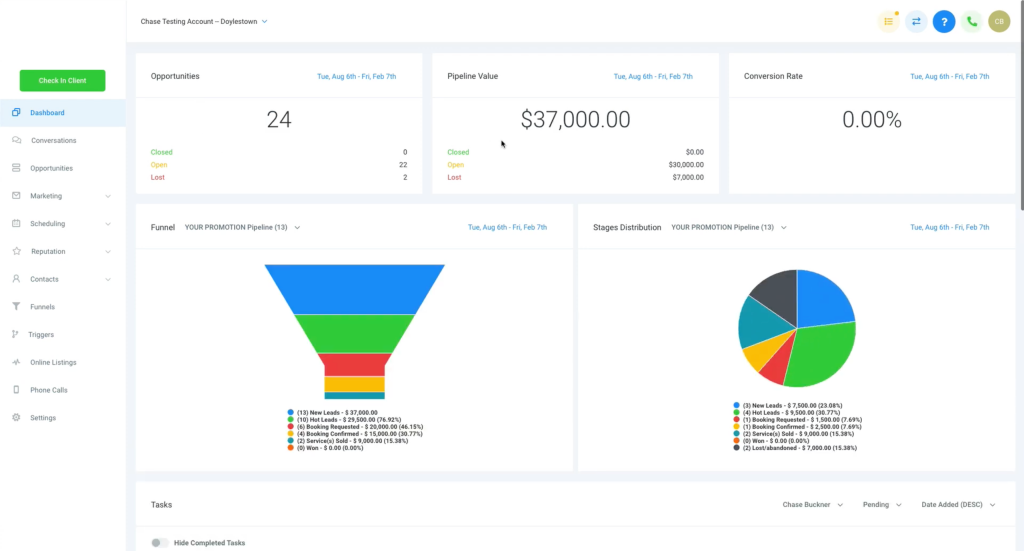
GoHighLevel is one of the few platforms designed specifically for marketing agencies.
Instead of focusing purely on contact management, it combines CRM functionality with marketing automation, campaign management, and funnel tools.
Many agencies use GoHighLevel because it brings pipelines, automation, and lead tracking into a single platform rather than relying on several separate tools.
Why agencies use it
Agencies often choose GoHighLevel because it allows them to manage multiple client accounts inside one system. Each client can have their own pipelines, campaigns, automation workflows, and reporting dashboards.
This structure makes it easier to track leads from different campaigns while keeping each client’s data organised.
Lead tracking inside GoHighLevel
Agencies commonly use GoHighLevel to track enquiries from landing pages, forms, and advertising campaigns inside a central pipeline. Leads can be tagged by source, campaign, or client, making it easier to see exactly where enquiries originate.
Automation workflows can then send follow-up messages immediately after a lead submits a form or booking request.
If you’re comparing the platform in more detail, our guide to GoHighLevel pricing explained breaks down the available plans and what each one includes.
Agencies managing larger client portfolios often explore the higher-tier options discussed in our GoHighLevel $497 plan review.
ClickFunnels
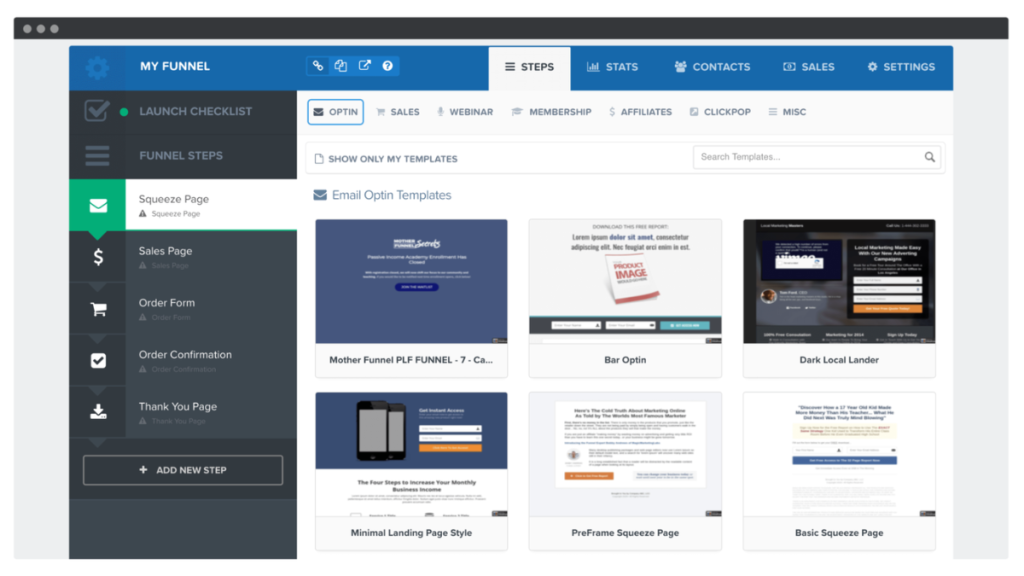
ClickFunnels is widely known as a platform for building sales funnels and lead generation pages.
Why agencies use it
Some marketing agencies rely heavily on funnel-based marketing. In these cases, a dedicated funnel builder can be useful for creating landing pages, opt-in pages, and conversion-focused campaigns.
ClickFunnels allows agencies to design structured funnels that guide prospects from the first interaction through to booking or purchase.
However, funnel builders focus primarily on capturing leads rather than managing long-term customer relationships. Because of this, many agencies pair funnel tools with a CRM system to track leads, manage pipelines, and handle follow-ups after the initial conversion.
Agencies comparing funnel tools with broader CRM platforms can see a deeper breakdown in our GoHighLevel vs ClickFunnels comparison.
HubSpot
HubSpot is one of the most widely recognised CRM platforms in marketing.
Why agencies use it
HubSpot combines CRM functionality with email marketing, reporting dashboards, and marketing automation tools.
Some larger agencies choose HubSpot because it provides a complete marketing ecosystem inside a single platform. Teams can manage contacts, run campaigns, and track performance without relying on as many external tools.
However, the platform can become expensive as contact lists grow or additional features are added, which is something many agencies consider when comparing CRM systems.
Research published by HubSpot also shows that responding quickly to leads significantly improves conversion rates, which is why CRM lead tracking and automation have become important parts of modern marketing platforms.
Pipedrive
Pipedrive focuses primarily on pipeline tracking and deal management.
Why agencies use it
Agencies that prioritise sales pipeline visibility often appreciate Pipedrive’s simple interface and visual deal tracking.
The platform makes it easy to see where prospects sit inside the sales process and helps teams organise deals across different stages.
However, agencies usually rely on additional marketing tools alongside Pipedrive for lead generation campaigns, landing pages, and automation workflows.
Many agencies use Pipedrive alongside marketing tools that generate leads while Pipedrive manages the sales pipeline.
How Agencies Choose the Right CRM
When comparing CRM systems, agencies usually focus on how well the platform supports their overall workflow.
Automation is often the first consideration. Agencies generating leads through ads or landing pages benefit from systems that automatically respond to enquiries and move leads through pipelines.
Lead tracking is another major factor. Agencies need to see exactly where enquiries originate and how those leads progress through campaigns.
Client management also plays an important role. Agencies must manage several businesses at once, so the CRM needs to support multiple pipelines without creating unnecessary complexity.
Finally, scalability becomes important. As agencies grow and lead volume increases, the CRM should continue handling automation, reporting, and campaign tracking without requiring major changes to the system.
Quick Self Check, Is Your Agency CRM Setup Working?
Before choosing the best CRM for marketing agencies, it’s worth checking whether your current system is actually organised..
Ask yourself
• Do all your leads go into one pipeline automatically?
• Can you see exactly where every lead came from?
• Do new enquiries receive a response within five minutes?
• Can you easily show clients how many leads their campaigns produced?
Quickly review your lead capture, pipelines, and automation setup.
If you answered “no” to any of these questions, your agency CRM setup may be fragmented or difficult to scale.
To help you review your setup, you can download the Marketing Agency CRM Setup Checklist.
Once you’ve reviewed your current setup, the next step is understanding how agencies organise lead tracking and automation using modern CRM platforms.
Final Thoughts
There isn’t one CRM that fits every marketing agency.
Some agencies prefer simple pipeline tracking tools. Others rely heavily on funnel builders for lead generation. Many eventually move toward systems that combine CRM functionality with automation and campaign management.
The best CRM for marketing agencies is ultimately the one that simplifies the agency’s workflow, tracks leads clearly, and allows campaigns to run without relying on a complicated stack of disconnected tools.
When the right system is in place, agencies can track leads across multiple campaigns, respond faster to enquiries, and manage client reporting far more efficiently.
FAQ
What is the best CRM for marketing agencies?
The best CRM for marketing agencies depends on how the agency manages leads and client campaigns. Agencies running multiple marketing campaigns often look for platforms that combine lead tracking, pipeline management, automation, and reporting in one system.
Why do marketing agencies need a CRM?
Marketing agencies manage leads from many different campaigns and clients. A CRM helps track enquiries, organise pipelines, automate follow-ups, and monitor where leads originate so agencies can clearly report results to clients.
Can a CRM manage multiple client pipelines?
Yes. Many CRM platforms allow agencies to manage separate pipelines for different clients or campaigns. This makes it easier to track leads from multiple sources while keeping each client’s data organised.
What features should a CRM for marketing agencies include?
A CRM designed for marketing agencies should include lead tracking, pipeline management, automation workflows, reporting dashboards, and integrations with marketing tools such as landing pages or advertising platforms.
Do marketing agencies need marketing automation in their CRM?
Many agencies benefit from CRM systems that include marketing automation. Automation can send follow-up emails, assign leads to team members, and move prospects through pipelines automatically, reducing the risk of missed opportunities.
Suggested Internal Links
You can link naturally in the article to these related guides
- CRM Software for Small Businesses
Helps readers compare broader CRM platforms and understand how different systems handle pipelines, automation, and lead tracking. - CRM for Lead Generation Businesses
Explains how agencies and businesses track enquiries and manage lead pipelines effectively. - GoHighLevel Pricing Explained (UK & US)
Breaks down the platform’s pricing structure and what each plan includes. - GoHighLevel $497 Plan Review
A closer look at the agency-focused plan used by agencies managing multiple client accounts. - Marketing Automation Tools for Businesses
Covers automation platforms used to manage lead nurturing, follow-ups, and campaign workflows.