
CRM lead management is the system businesses use to stop valuable leads from slipping through the cracks.
Most companies don’t lose sales because their product is bad. They lose sales because they don’t respond quickly enough, forget to follow up, or lose track of conversations buried in emails, spreadsheets, and sticky notes.
That’s exactly the problem CRM lead management solves.
Instead of hoping someone remembers to call a prospect, a CRM automatically tracks every lead, stores contact details, and triggers follow-ups so no opportunity gets ignored.
Once businesses implement proper lead management, they often realise how much revenue was being lost before.
Many businesses use platforms like GoHighLevel because they combine lead tracking, pipelines, and automation in one dashboard.
Many businesses use platforms like GoHighLevel because they combine lead tracking, automation, and pipelines in one place. This eliminates the chaos that often happens when sales teams juggle multiple tools.
Quick Summary
CRM lead management helps businesses capture leads, organise them, and convert them into customers without losing track of conversations.
Modern CRM systems automate follow-ups through email, SMS, and workflow automation so leads don’t go cold.
Businesses that respond to leads quickly dramatically increase their chances of conversion.
Most CRM platforms combine lead capture, pipeline tracking, and automation in a single system, allowing sales teams to track and nurture leads more efficiently.
What Is CRM Lead Management?
CRM lead management helps businesses capture leads, organise them, and convert them into customers without losing track of conversations.
Modern CRM systems automate follow-ups through email, SMS, and workflow automation so leads don’t go cold. Many businesses use platforms like GoHighLevel because they combine lead tracking, automation, and pipelines in one place.
Businesses that respond to leads quickly significantly increase their chances of conversion.
Most CRM platforms combine lead capture, pipeline tracking, and automation in a single system. You can see examples in this guide to best CRM with automation for small businesses.
Why Businesses Lose Leads Without CRM Lead Management
Here’s the uncomfortable truth.
Most small businesses think they have a marketing problem when they actually have a lead management problem.
Leads arrive from websites, social media, advertising campaigns, and referrals.
But without a structured system to manage those leads, things start falling apart quickly.
Emails get missed.
Calls are forgotten.
Follow-ups never happen.
Eventually, the prospect buys from someone else.
This is exactly why structured CRM systems exist.
Research from HubSpot shows that businesses that respond to leads quickly significantly increase their chances of conversion.
CRM lead management tools solve this problem by ensuring every lead is captured, tracked, and followed up automatically.
Best CRM Platforms for Lead Management
Most small businesses think they have a marketing problem when they actually have a lead management problem.
Leads arrive from websites, social media, advertising campaigns, and referrals.
But without a structured system to manage those leads, things start falling apart quickly.
Emails get missed.
Calls are forgotten.
Follow-ups never happen.
Eventually, the prospect buys from someone else.
This is exactly why structured CRM systems exist.
Research from HubSpot shows that businesses that respond to leads quickly significantly increase their chances of conversion.
CRM lead management tools solve this problem by ensuring every lead is captured, tracked, and followed up automatically so opportunities don’t slip through the cracks.
Several CRM platforms offer strong lead management tools, but they differ in automation features, pricing, and ease of use.
CRM Lead Management Software Comparison
| Platform | Best For | Automation | Pricing |
|---|---|---|---|
| GoHighLevel | All-in-one CRM and marketing automation | Advanced workflows | From $97/month |
| HubSpot | Marketing and enterprise sales teams | Advanced automation | Free plan, paid tiers |
| Zoho CRM | Affordable CRM for small businesses | Moderate automation | From $14/user |
| ActiveCampaign | Email automation and lead nurturing | Advanced automation | From $39/month |
| Pipedrive | Sales pipeline management | Basic automation | From $14.90/user |
How CRM Systems Track Leads Automatically
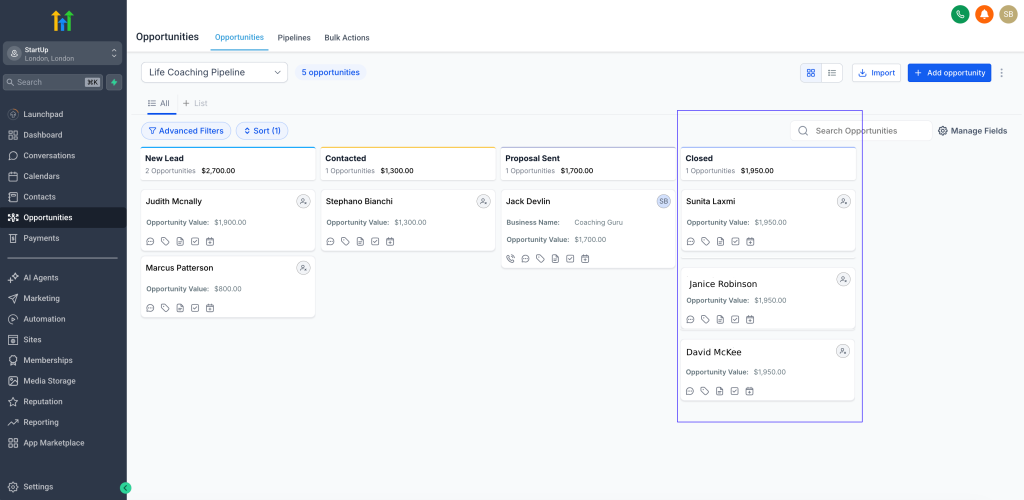
Once a lead enters a CRM lead management system, the tracking process becomes largely automated.
The lead is captured through a form, landing page, or messaging tool and stored inside the CRM with the relevant contact details.
The system then places the lead into a pipeline stage such as “New Lead” or “Contacted,” allowing sales teams to see exactly where each prospect sits in the sales process.
From there, automation workflows can trigger actions such as sending welcome emails, scheduling follow-up reminders, or assigning tasks to the sales team.
Businesses exploring these automation capabilities often compare the platforms discussed in our guide to best CRM for marketing automation.
Platforms like GoHighLevel combine lead capture, pipeline management, and automation in one dashboard. This allows businesses to manage the entire sales process from a single system.
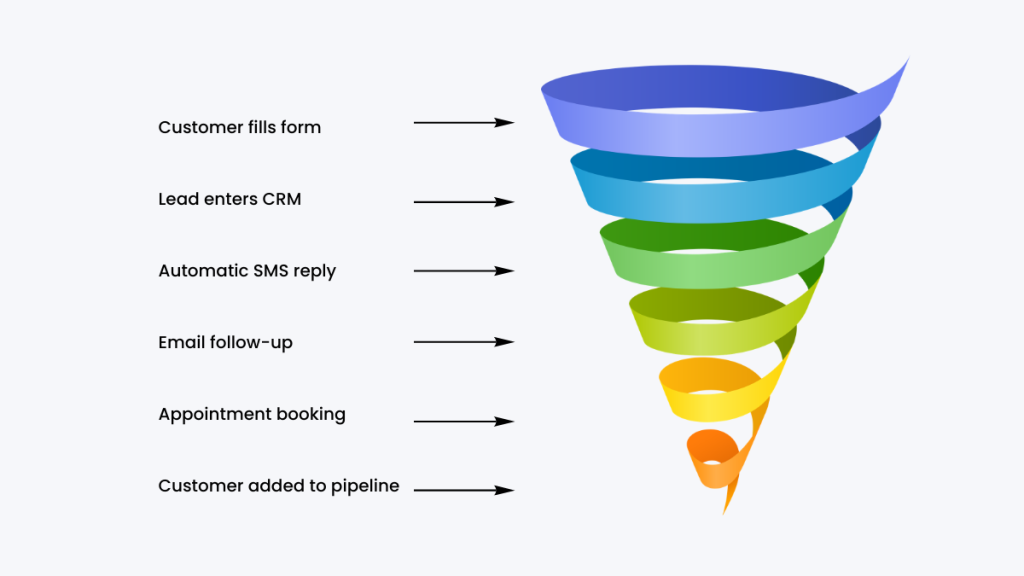
CRM Lead Management Process
Most CRM systems manage leads through a simple process:
- Lead capture from forms, landing pages, or ads
- Lead qualification through scoring or tags
- Pipeline placement inside stages such as New Lead or Contacted
- Automated follow-ups through email, SMS, or reminders
- Conversion or nurturing depending on the prospect’s response
Key CRM Lead Management Features
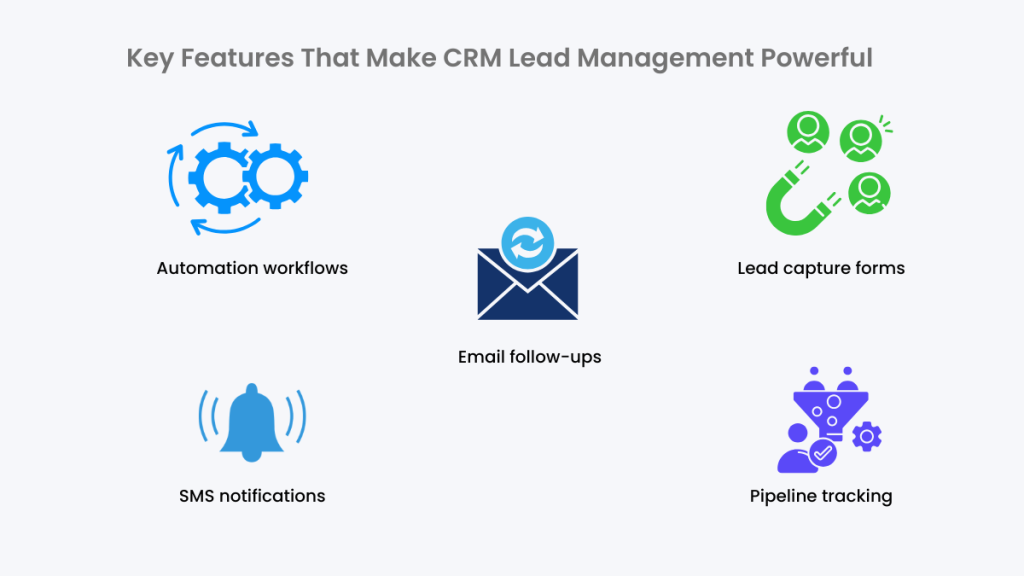
Modern CRM systems include several features designed to help businesses capture, track, and convert leads more effectively.
Lead capture tools collect enquiries from websites, landing pages, and advertising campaigns so prospects enter the system automatically.
Lead scoring helps businesses identify which prospects are most likely to convert, allowing sales teams to prioritise the most valuable opportunities.
Pipeline tracking visually shows where every lead sits inside the sales process, giving teams clear visibility of deals in progress.
Automation workflows trigger follow-up emails, SMS reminders, and notifications so sales teams never forget to respond.
Businesses comparing CRM platforms also need to understand pricing structures, which is explained in our article on CRM software pricing.
Conclusion
CRM lead management is no longer optional for businesses that want to grow consistently.
Without a structured system to capture and track leads, valuable opportunities are lost every day.
Modern CRM platforms allow businesses to respond faster, organise prospects, and automate follow-ups that turn enquiries into customers.
For many companies, implementing proper lead management becomes the turning point that transforms chaotic sales processes into predictable, scalable revenue.
FAQ
What is CRM lead management?
CRM lead management is the process of capturing, tracking, and nurturing potential customers using a customer relationship management system. It allows businesses to organise leads, follow up automatically, and move prospects through a structured sales pipeline until they convert into customers.
How does CRM lead management work?
CRM lead management works by capturing leads from forms, landing pages, or marketing campaigns and storing them inside a central system. The CRM then tracks each lead through pipeline stages and can automate follow-ups such as emails, reminders, or tasks for the sales team.
Why is CRM lead management important?
CRM lead management is important because it prevents businesses from losing potential customers due to missed follow-ups or disorganised sales processes. By tracking every lead and automating communication, companies can respond faster and improve conversion rates.
What is the best CRM for lead management?
The best CRM for lead management depends on how a business captures and follows up with leads. Many modern platforms combine lead capture tools, pipeline tracking, and automation so businesses can manage the entire sales process from a single dashboard.
Can CRM systems automate lead follow-ups?
Yes. Most modern CRM platforms include automation tools that send follow-up emails, SMS messages, or reminders automatically after a lead enters the system. This ensures prospects receive timely responses without relying on manual follow-ups.
What is a CRM lead management system?
A CRM lead management system is software that captures, tracks, and manages potential customers from the moment they enter a business’s pipeline. These systems organise lead data, automate follow-ups, and help sales teams move prospects through the sales process.
Suggested Reads
If you’re trying to understand how leads move through a sales process, our guide to CRM Pipeline Management explains how businesses track prospects from first enquiry to closed deals.
Businesses focused on capturing website enquiries should also read our breakdown of Best CRM for Lead Generation, which explores tools designed specifically to capture and nurture leads automatically.
For a deeper look at automation features, our article on CRM Automation Tools explains how modern CRM systems automate follow-ups, messaging, and lead nurturing workflows.
If you’re comparing software costs before choosing a platform, our guide to CRM Software Pricing explains what businesses actually pay for CRM systems and the hidden costs many platforms include.