
Affiliate links – I earn a commission if you sign up through this page, at no extra cost to you. That’s exactly why the weaknesses below aren’t softened. If GoHighLevel isn’t right for your business, I’d rather you know before you start a trial
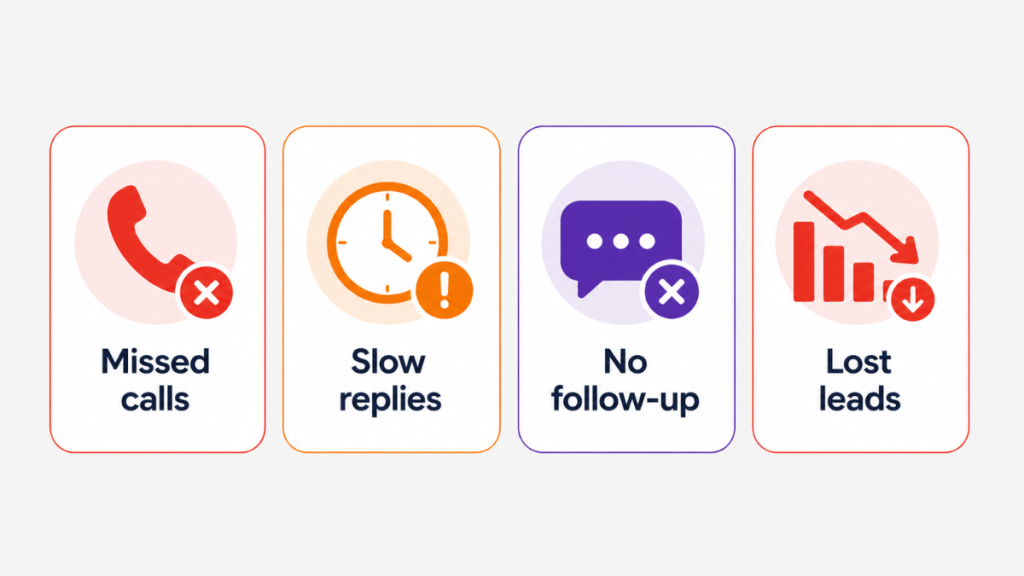
The best CRM for high ticket sales isn’t the one with the most features. It’s the one that makes sure no lead goes cold, every follow-up happens on time, and your pipeline reflects reality, not wishful thinking. When a single deal is worth £2,000–£20,000, a broken follow-up system isn’t just inefficient. It’s expensive.
Key takeaways
- 44% of reps give up after one follow-up – but most high ticket deals require 8+ touchpoints before closing (Prospeo, 2026)
- 63% of sales managers say their organisation does a poor job managing its pipeline (Prospeo, 2026)
- Companies with clearly defined sales processes see 18% higher revenue growth (Harvard Business Review)
- Teams that review their pipeline weekly hit 87% forecast accuracy vs 52% for ad-hoc reviewers (Prospeo, 2026)
- For small business high ticket sellers – coaches, consultants, agency owners – GoHighLevel provides the strongest combination of pipeline management, automated follow-up, and lead tracking in 2026
Choosing the wrong CRM wastes time and money. Here’s a breakdown of the best CRM for small business
Why High Ticket Sales Demands a Different CRM Approach
In high ticket sales, volume is low and value is high. You’re not trying to convert 200 leads at a 2% rate. You’re trying to convert 10–20 qualified prospects at a much higher rate – and every dropped lead matters.
That changes what you need from a CRM completely. You don’t need mass email blasting. You need:
- A pipeline that shows exactly where every prospect is and what needs to happen next
- A lead follow-up system that never lets a warm lead go cold
- Personalised sequences that feel human, not automated
- Visibility into which conversations are stalling and why
- Speed – because in high ticket sales, the first credible response wins
Most generic CRMs are built for volume sales. They optimise for lead quantity, not lead quality. For high ticket sellers, that’s the wrong foundation entirely.
The 5 Things Your CRM Must Do for High Ticket Sales
1. Multi-Touch Follow-Up That Actually Runs
The data is stark: 44% of sales reps give up after just one follow-up, but closing a high ticket deal typically requires 8 or more touchpoints. That gap – between one attempt and the eight needed to close – is where most high ticket revenue disappears.
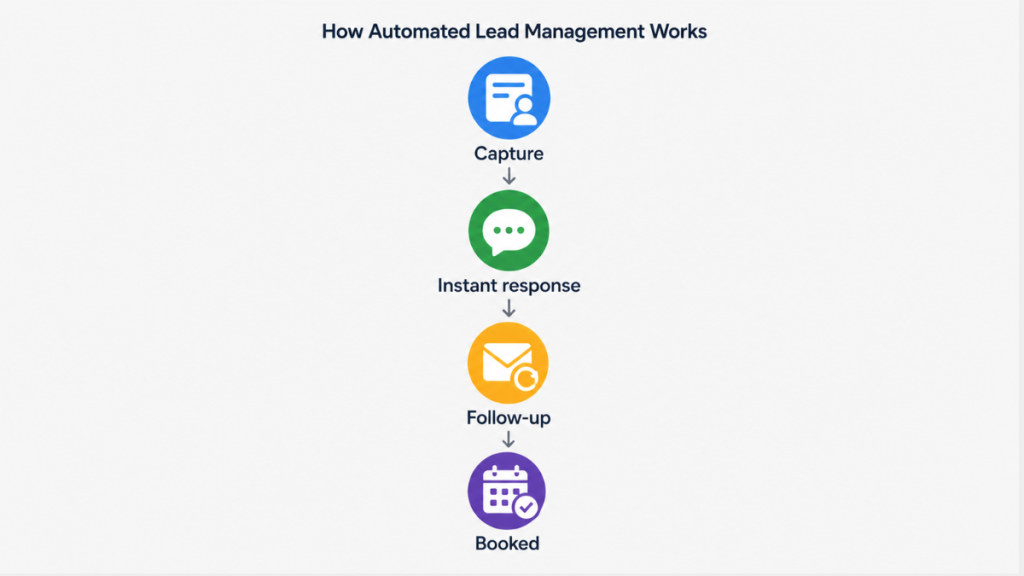
Your CRM needs to run a structured follow-up sequence automatically. Not remind you to follow up. Actually send the messages, make the calls, and keep the conversation alive until the prospect either buys or explicitly opts out. See how CRM automation software handles this without manual input.
2. A Pipeline That Reflects Reality
63% of sales managers say their organisation does a poor job managing its pipeline. In high ticket sales, a bloated or inaccurate pipeline is worse than no pipeline – it creates false confidence and hides the deals that actually need attention.
Your pipeline needs clear stage definitions, entry and exit criteria for each stage, and automatic updates based on prospect behaviour. When a lead books a call, their stage should move. When they go quiet for 7 days, you should know. This is what CRM pipeline management looks like when it’s configured properly.
3. Speed to First Response
In high ticket sales, prospects often contact multiple providers simultaneously. The first credible response wins the conversation – and frequently the sale. Research consistently shows that responding within 5 minutes makes you 21x more likely to qualify a lead than responding after 30 minutes.
Your CRM needs to fire an automated first response the moment a lead arrives – personalised, relevant, and fast. Then notify you when the lead engages so you can follow up with a human touch at exactly the right moment.
4. Full Conversation History
High ticket buyers expect you to know their context. If they had a discovery call three weeks ago and now they’re back, they expect the next conversation to pick up where the last one left off – not start from scratch.
Your CRM needs to log every interaction automatically: calls, emails, SMS, notes. When you open a contact record before a follow-up call, you should see everything – what was discussed, what objections came up, what was promised. This is basic CRM hygiene that surprisingly few setups actually achieve.
5. Weekly Pipeline Review Built Into Your Process
Teams that review their pipeline weekly hit 87% forecast accuracy. Ad-hoc reviewers hit 52%. For high ticket sellers where a single deal represents a significant chunk of monthly revenue, that accuracy difference is the difference between confident decision-making and guesswork.
Your CRM should make the weekly pipeline review easy – a clean dashboard that shows every deal, its current stage, last activity, and next step. See our lead management system for service businesses guide for how to structure this process.
What a High Ticket Sales Pipeline Should Look Like
High ticket sales cycles are longer and more complex than volume sales. A generic 3-stage pipeline – New, In Progress, Closed – doesn’t give you the visibility you need. Here’s a practical 6-stage structure that works for coaches, consultants, and high ticket service providers:
- New lead – enquiry received, first automated response sent, source logged
- Qualified – fit confirmed, budget and timeline understood, discovery call booked
- Discovery – call completed, needs identified, proposal or next step agreed
- Proposal sent – offer delivered, review call booked within 48 hours
- Negotiation – terms being discussed, objections being handled
- Closed (won/lost) – outcome recorded, reason captured, either onboarding or nurture sequence triggered
The key rule: if a deal has had no activity for more than 7 days, it should trigger an automatic re-engagement. If it stays stagnant beyond 2x your average sales cycle, it gets moved to a nurture sequence – not left to rot in your pipeline and inflate your forecast.
The Best CRM Options for High Ticket Sales
GoHighLevel – Best Overall for Small Business High Ticket Sellers
GoHighLevel is built around exactly the workflow high ticket sellers need – pipeline management, automated multi-touch follow-up, calendar booking, and full conversation history in a single platform. You don’t need to stitch together a CRM, an email tool, a booking system, and a follow-up platform. It’s all in one place.
What makes it right for high ticket sales specifically:
- Custom pipeline stages that match your exact sales process – not a generic template
- Automated follow-up sequences that run across email, SMS, and voicemail – personalised by lead source and behaviour
- Smart notifications that tell you when a prospect engages – so your human follow-up lands at exactly the right moment
- Full conversation history logged automatically – every call, email, and message in one timeline
- Calendar booking built into the pipeline – prospects can book their discovery call without back-and-forth
- Missed call text-back – so no lead ever disappears because you didn’t answer in time
See the full GoHighLevel pricing UK & US breakdown including what it replaces and what it costs in GBP.
Pricing: $97/month (Starter) or $297/month (Unlimited). No per-user fees on Starter.
Best for: Coaches, consultants, agency owners, course creators, and service providers selling offers above £1,000.
HubSpot – Best for Teams With a Dedicated Sales Function
HubSpot’s Sales Hub provides strong pipeline visibility, deal tracking, and email sequences. For high ticket sellers with a small sales team – 2 to 5 reps – the Professional tier provides the depth needed to manage complex sales cycles.
The limitation is cost. The mandatory $1,500 onboarding fee on Professional plus per-user pricing makes it expensive for solo operators or very small teams. And the automation depth on lower tiers isn’t sufficient for the kind of multi-touch sequences high ticket sales requires.
Best for: High ticket businesses with a dedicated sales team and budget for the Professional tier.
See How GoHighLevel Manages High Ticket Pipelines and Follow-Up →
Pipedrive – Best for Pipeline Visibility on a Budget
Pipedrive’s visual pipeline is one of the cleanest in the market. For high ticket sellers who primarily need deal tracking and follow-up reminders – rather than deep automation – it’s a strong option at a predictable per-user price.
The gap is automation depth. Pipedrive doesn’t match GoHighLevel’s native multi-touch capability out of the box. You’ll need integrations for SMS, and the follow-up sequences require more manual configuration. See our full Pipedrive review UK for a detailed breakdown.
Best for: Solo consultants or small teams who need clean pipeline visibility and don’t require heavy automation.
Zoho CRM – Best Budget Option With AI Features
Zoho CRM’s Zia AI analyses deal patterns, flags stalling opportunities, and can predict which deals are most likely to close. For budget-conscious high ticket sellers who want some intelligence in their pipeline management, Zoho provides enterprise-grade features at SMB pricing.
The tradeoff is setup complexity – Zoho requires more configuration than GoHighLevel to achieve the same workflow depth.
Best for: Budget-conscious high ticket sellers who want AI-powered deal insights without enterprise pricing.
The Follow-Up Rule for High Ticket Sales
Most high ticket deals don’t close on the first call. Or the third. The average requires 8+ touchpoints – and most sellers give up after one or two. Here’s what a proper high ticket follow-up sequence looks like inside a CRM:
Day 1: Automated personalised email immediately after discovery call – recap, next step, relevant case study Day 3: SMS check-in – short, personal, no hard sell Day 5: Email with relevant content – objection handling or social proof Day 8: Phone call attempt – logged in CRM whether answered or not Day 12: Final email – clear, direct, low-pressure close or invitation to reconnect later Day 21: Move to long-term nurture – monthly value content, no hard sell
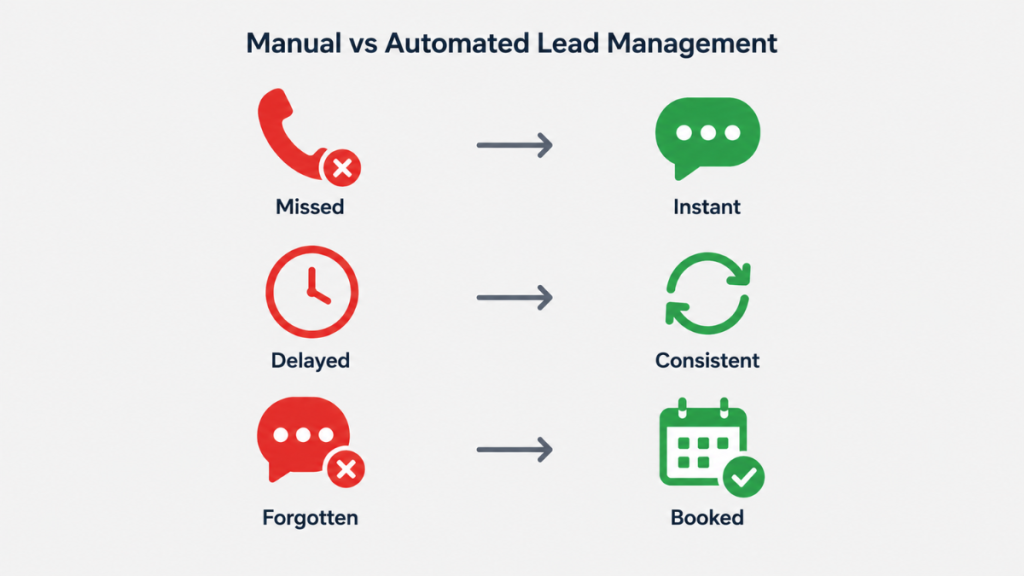
This sequence runs automatically inside GoHighLevel. Without a CRM that automates it, it depends on you remembering – and 44% of sellers don’t get past step one.
Summary
The best CRM for high ticket sales is one that keeps every deal visible, every follow-up on time, and every conversation in context. When a single lost deal costs you thousands, the system behind your sales process isn’t optional – it’s the difference between a pipeline you can trust and one that’s full of stale opportunities you’re afraid to close.
GoHighLevel handles the full high ticket workflow – pipeline, follow-up, booking, conversation history, and notifications – in a single platform. For coaches, consultants, and service providers selling premium offers, it’s the strongest option we’ve tested in 2026.
FAQs
What is the best CRM for high ticket sales in 2026? The best CRM for high ticket sales in 2026 is GoHighLevel for small business sellers – coaches, consultants, and service providers. It combines pipeline management, automated multi-touch follow-up, calendar booking, and full conversation history in one platform without per-user fees.
How many follow-ups does it take to close a high ticket deal? Most high ticket deals require 8 or more touchpoints before closing. Research shows 44% of sales reps give up after just one follow-up – which means the majority of high ticket revenue is being left on the table through premature give-up.
What should a high ticket sales pipeline look like? A high ticket sales pipeline should have 6 clear stages: new lead, qualified, discovery, proposal sent, negotiation, and closed. Each stage should have defined entry and exit criteria, and any deal with no activity for 7+ days should trigger an automatic re-engagement sequence.
Can GoHighLevel handle high ticket sales? Yes – GoHighLevel is particularly well suited to high ticket sales for small businesses. Its custom pipeline stages, automated multi-touch sequences, calendar integration, and conversation tracking cover the full workflow that high ticket sellers need. See our GoHighLevel vs HubSpot comparison for a detailed breakdown.
How important is speed to first response in high ticket sales? Critical. Research shows responding within 5 minutes makes you 21x more likely to qualify a lead than responding after 30 minutes. In high ticket sales where prospects often contact multiple providers simultaneously, the first credible response wins the conversation – and frequently the sale.
Suggested Reads
Why Most Businesses Lose Leads (And How a CRM Fixes It) → the root cause of lead loss before conversion even starts
CRM Pipeline Management (2026) → how to build a pipeline that tracks and converts leads properly
GoHighLevel vs HubSpot (2026) → side-by-side comparison for small business high ticket sellers
GoHighLevel Pricing UK & US → real cost breakdown including what it replaces